


Restorative Justice: Balancing Accountability, Mercy and Rehabilitation

Catholic teaching calls for justice that protects victims, holds offenders accountable and recognizes the possibility of redemption. Here's how that vision informs the Colorado bishops' public policy priorities.
Part 8 of a 10-part series on the Colorado bishops' public policy priorities
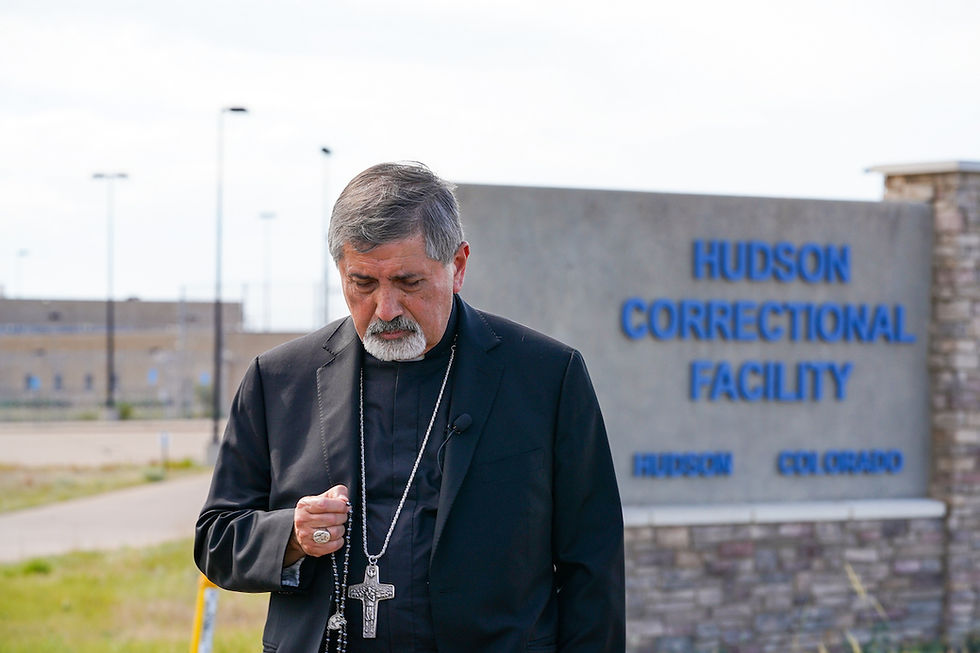
Criminal justice reform should focus on preventing crime and caring for survivors of crime, while also offering those who commit crimes an opportunity to rehabilitate and effectively return to society.
The Catholic Church teaches that justice is more than punishment. Rooted in the dignity of every human person, Catholic Social Teaching on restorative justice recognizes the dignity of both victims and offenders.
This approach fosters accountability, healing and reconciliation. It requires care and support for victims while simultaneously offering offenders a path toward rehabilitation and reintegration into society, reflecting the Gospel mandate of mercy and the pursuit of the common good.
As the Catechism of the Catholic Church explains, punishment serves to defend public order and protect people's safety, but it also has a restorative purpose: “As far as possible, it must contribute to the correction of the guilty party” (CCC 2266).
The Church's Teaching on Restorative Justice
The Church's teaching on restorative justice recognizes that human dignity is not lost when a person commits a crime, and that justice should seek healing and restoration wherever possible.
In 2000, the United States Conference of Catholic Bishops (USCCB) addressed these principles in their pastoral statement, Responsibility, Rehabilitation and Restoration: A Catholic Perspective on Crime and Criminal Justice. The bishops emphasized that just as God never abandons us, we must not abandon one another. Our response to sin and failure should include justice, contrition, reparation and reintegration into the community, rather than abandonment and despair.
Pope St. John Paul II also examined the transformative power of mercy in his 1980 encyclical Dives in Misericordia, emphasizing that merciful love is at the heart of the Gospel and Christianity. As he explained, “The Church lives an authentic life when she professes and proclaims mercy,” bringing people closer to the sources of the Savior's mercy.
The Gospel's emphasis on mercy demonstrates how justice can be given to victims while also working to rehabilitate offenders and reconcile them with God and society.
Restorative Justice in Colorado
Each year, Colorado lawmakers introduce legislation to support victims of crime and provide offenders with opportunities for restorative justice. Catholic teaching supports efforts to reduce recidivism and rehabilitate offenders, while also providing compassionate care for victims and maintaining public safety.
Colorado's criminal code includes provisions for restorative justice practices that emphasize repairing harm caused to victims and the community.
Lawmakers have also consistently advocated for increased funding for the Crime Victims Compensation Fund, which provides assistance to victims in the aftermath of a crime. Such measures recognize that the harm caused by crime is real and that the state has a responsibility to support victims in their healing.
Restorative justice has also been a focus of legislation involving juvenile offenders. In recent years, Colorado lawmakers have enacted measures to expand rehabilitation programs and alternative services for juveniles in the justice system, eliminate certain court costs for offenders under 18 and provide additional support within the juvenile detention system.
Young offenders often face challenges involving family relationships and other circumstances, making opportunities for rehabilitation and restorative justice especially important.
Other legislation has focused on protecting survivors of crime, including children who have experienced sexual exploitation and trafficking.
These measures reflect the Church's concern for the sanctity of life, justice for victims and accountability for offenders.
Putting the Church's Teaching into Practice
For Catholics, restorative justice begins with recognizing that sin and crime involve broken relationships, not simply broken laws.
In everyday conversations, Catholics can emphasize that God's justice seeks to heal and restore the person, offering an alternative to a culture that often favors permanent punishment and exclusion.
True justice honors the voices and needs of victims, reflecting Christ's care for those who suffer, while also recognizing that offenders remain human persons with the possibility of repentance and redemption.
When engaging with lawmakers, Catholics should share their experiences with restorative justice and the criminal justice system. Specific examples and personal stories can demonstrate how justice can be provided to victims while also creating opportunities for rehabilitation and restoration for offenders. Advocacy can focus on policies that support victims, rehabilitate those who have committed crimes and address the underlying causes of criminal behavior.
Ultimately, Catholic teaching calls for punishment that is constructive, reformative and paired with the possibility of redemption.
For Catholics, promoting restorative justice means working toward a society that protects victims, holds offenders accountable and recognizes that mercy and justice are not opposed, but work together to restore human dignity and strengthen the common good.