

When Faith Becomes Flesh: How Love Left Its Mark on Julia Greeley, Mother Teresa and the Sisters of Loretto
Worn knees, aching feet and bones marked by service offer a fascinating glimpse into a Catholic faith that isn’t merely spiritual — it is lived through the body.
Angel wings. Halos. Voices from the clouds.
When you think of faith, you might think of something far-off or hard to describe: a feeling, a private conviction, an invisible virtue floating around somewhere out there.
And when you do think about what faith looks like, examples are probably just as unreachable: hands permanently folded in prayer. Eyes clenched shut. Rosary beads probably glued to a grandma’s fingers.
Those can certainly be beautiful signs of faith, to be sure. But they can also make faith seem like something on the surface, on the outside.
But what if faith goes deeper? What if it literally becomes part of us, visible in our bodies, even in our bones?
The Sisters of Loretto: Prayer in Action
Founded in 1812 in Kentucky, the Sisters of Loretto dedicated themselves to educating poor children. Over time, the order expanded across the new American frontier, including Colorado, making quality education accessible as an expression of justice, human dignity and faith in action.
“They derived strength from communal living and prayer,” the Loretto Community says of the early sisters, devoted to Mary at the foot of the Cross.
In Colorado, the sisters served at the former Loretto Heights College in Denver, St. Mary’s Academy in Englewood and in several Catholic schools across the state.
In 2022, in what was dubbed “Operation Sacred Rescue,” some of the sisters buried at Loretto Heights were exhumed and reinterred at Mount Olivet Catholic Cemetery in Wheat Ridge ahead of the property's sale. In the process, archaeologists noticed signs of their faithful service in their bodies, even decades after their death.
The wear on certain bones — including clavicles, or collarbones, and patellas, or kneecaps — suggested repeated patterns: shoulders worn by loving service, knees accustomed to devoted prayer.
“There are changes in the knees for a lot of these women that are pretty significant,” explained Dr. Lauren Hosek, an assistant professor of anthropology at the University of Colorado Boulder and historical bioarchaeologist who worked with the Loretto Community throughout Operation Sacred Rescue. Since the sisters were reinterred at Mount Olivet Cemetery, Dr. Hosek has continued to research their remains with students, learning about their vocations, service and the conditions in which they lived.
“I think that may be potentially connected to genuflection and kneeling, but also, as educators and active women working with children, who knows what all they were doing?”
No matter how their faith took shape in loving service, the Loretto sisters show clearly how faith becomes flesh, Dr. Hosek said, noting that this intersection is at the heart of her interdisciplinary, holistic research.
“Practices become embodied. They become part of the way that we move, the things we’re putting into our body and what we’re doing,” she told the Denver Catholic. “They can shape our actual physical body because we’re creatures that we call biocultural. We’re both biological and cultural, and our bodies are reflective of this kind of intersection.”
Working with the Loretto Community has been powerful, Dr. Hosek said, especially considering how these Catholic educators continue to teach — even 100 years after their deaths.
“They’re still teaching us,” she said, remembering the impactful point one of the Loretto sisters made during Operation Sacred Rescue. “They were all educators in some way, and yet here they are, in some cases, over a century later, still teaching people things.”

Julia Greeley: A Life Given In Service
In nineteenth-century Denver, faith looked like a little red wagon.
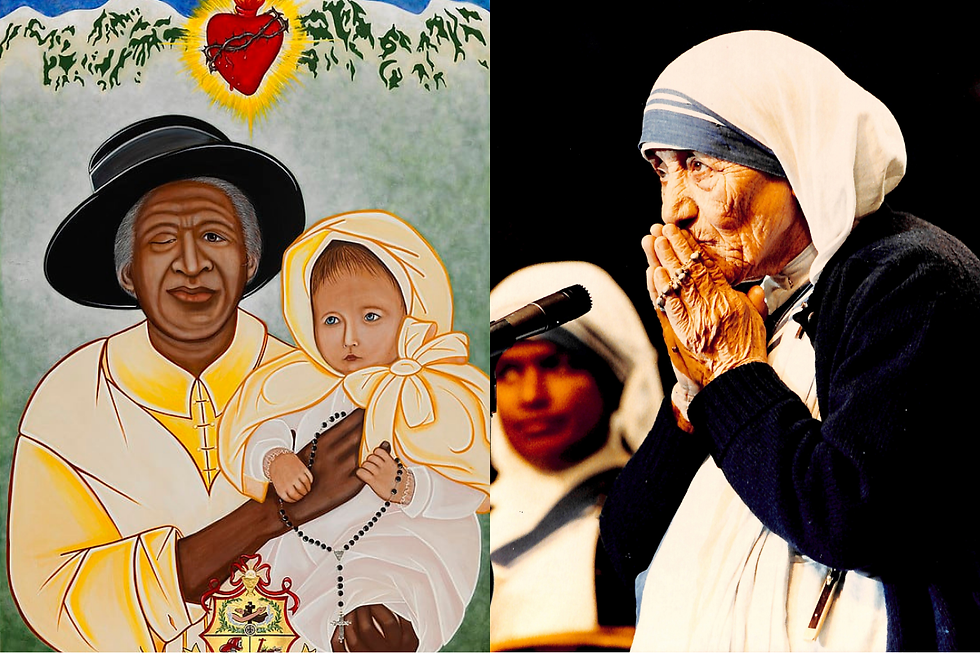
Denver’s own “Angel of Charity,” Servant of God Julia Greeley, was known for pulling that little red wagon all through the Five Points neighborhood and beyond. She would walk miles each day, attending Mass, spreading devotion to the Sacred Heart of Jesus, especially among firefighters, and secretly giving alms to poor white families who, because of the racism of the time, might have been embarrassed to receive help publicly from a formerly enslaved Black woman.
The little red wagon symbolized Julia’s deep faith, profound hope and intense love.
But what most people didn’t see? Julia had severe wear on her bones throughout her body.
Archaeologists discovered serious calcification in the shoulders and a broken ankle that never set properly when her remains were exhumed as part of her canonization process.
“What I saw was great evidence of somebody who was both strong but also suffered,” said Gary Schaaf, executive director of Catholic Funeral and Cemetery Services (CFCS) of Colorado, who helped to oversee Julia Greeley’s exhumation from Mount Olivet Catholic Cemetery in Wheat Ridge.
“One of the things that I could see as I collaborated with our forensic anthropologist was calcification in the shoulder area that’s consistent with strength. People who do lots of manual labor will get a lot of calcification in that area, and she had that,” he explained. “So she certainly had a history of working hard and working manually. She also had a broken ankle that was never healed correctly, so it was askew. It was a pretty nasty break that had inappropriately healed, which must have hurt a lot.”
Despite the great wear, she continued to give sacrificially — not simply from her meager finances, but even from her physical wounds. That dedication shows a spiritual strength that matched her physical strength, Schaaf noted, pointing to Julia’s small stature (she was only about five feet tall) and spiritual magnitude.
In short, Julia’s body bore the cost of charity and became a privileged place where love came alive in service.
“I just remember thinking how profound it was to think about how painful that must have been for her to walk around with her little red wagon, delivering water, delivering prayer cards,” Schaaf continued. “But you never see her complain. These are the hidden things that I suspect are consistent with saints. They don’t complain about stuff.”
St. Teresa of Calcutta: ‘Blessed the Feet’
OK, stay with me here. Talking about the feet of a saint might seem strange to you, but I promise I’m making a pretty cool point.
Mother Teresa was known for her compassionate care for the poorest of the poor, even reaching into Indian gutters to rescue individuals dying in the most abject, dehumanizing conditions. She would clean them, care for them and love them until they went home to the Lord.
She would travel the world visiting her Missionaries of Charity, encouraging and challenging them in their work. She would speak truth to power, calling governments and leaders to a deeper love for the poor. Most of all, she would spend hours in conversation with God, even despite a prolonged, intense darkness in which she did not feel his presence.
She also did this all with misshapen feet, worn by the miles of love she trekked in service of others.
During a visit to Denver in the 1980s, Denver Catholic Register photographer James Baca noticed those feet as Mother Teresa stood on stage above him and snapped this legendary photo.
That visit to the Mile High City, and that epiphany, call to mind God’s words to the prophet Isaiah: “How beautiful upon the mountains are the feet of the one bringing good news, announcing peace, bearing good news, announcing salvation, saying to Zion, ‘Your God is King!’” (Isaiah 52:7).
After years of walking to meet the suffering, after years of pulling the dying to safety, after years of trekking across the planet to announce to others that God is real and he cares for them, Mother Teresa’s feet bore the mark of her compassion. Her faith had become visible.
Worn though they were, how beautiful they are, given how they’ve carried the Good News, announced salvation and peace.
Scripture and Sacraments: God Speaking in Our World
From the beginning, God has used the material to communicate the immaterial.
He fed Israel with manna (see Exodus 16), healed the people when Moses lifted up a bronze serpent on a pole (see Numbers 21), and led his people through the Red Sea through Moses’ hands and staff (see Exodus 14).
Then came the greatest example of all: “The Word became flesh and dwelt among us” (John 1:14).
Throughout Jesus’ ministry, he used the visible to point to the invisible.
John the Baptist used water to call people to new life, a repentant one cleansed of sin (see Mark 1). Jesus fashioned mud to heal a blind man (see John 9). Jesus stuck his fingers in a deaf man’s ears to heal him (see Mark 7). Jesus multiplied five loaves and two fish to feed thousands (see Matthew 14).
As Jesus prepared to give himself out of love for us on the Cross, he left a memorial of who he is and what he’s done. He took bread, blessed it, broke it and gave it to the disciples. He took wine, blessed it and gave it to the disciples (see Matthew 26).
In the Eucharist, just as in every sacrament, physical, visible signs make present invisible graces offered by God. Jesus gives himself through matter, and our faith becomes flesh as we receive him.
What once was an ethereal, distant reality is now present before us. Complex realities like salvation, sin, repentance and grace are made manifest through water, holy oil, bread and wine and the hands of a priest.
Love Leaves Evidence
In each of these cases, whether in Scripture, in the sacraments or in the lives of those who have followed Christ on this earth, faith becomes flesh. The immaterial becomes material. The body becomes the privileged place where faith and love become visible, where they leave their evidence.
The beautiful thing is, too, that this dynamic is not exclusive to saints and consecrated people. It’s seen in a mother whose body stretches to accommodate and nourish new life. It’s seen in a father’s sore back from carrying his child. It’s seen in a volunteer’s swollen feet, from having stood much of the day serving their neighbor.
This isn’t about curiosities or a “believe it or not” kind of holiness. It’s not about seeking suffering and damaging the bodies God has given us to steward, either.
It is, however, a reminder that we literally and physically change when we take up our crosses and follow Jesus. When Jesus says he comes to make “all things new” (Revelation 21:5), he means it: not just with our hearts and souls, but our entire being.
Faith does not remain ethereal, far off and hard to describe. In Jesus, and in those who follow him, faith becomes flesh.