

More than a Ceremony: What it Means to be a Catholic Godparent

Behind the Church's requirements is a deeper mission: helping a child grow in faith, follow Christ and one day become a saint.
By Alejandra Bravo
Director of Evangelization and Family Life Ministries
Archdiocese of Denver
Why does Baptism preparation sometimes feel like a burden instead of good news? What would change if we helped parents approach Baptism preparation with the same excitement and intentionality they bring to every other important milestone in their child’s life — not because it is another event to plan, but because it is the beginning of their child’s life in Christ?
When parents ask, “Why can’t this person be a godparent?” they are often asking a deeper question: “Why does the Church care so much?” Honestly, that is an excellent question. In fact, it may be exactly the question we should be asking. The answer is simple: because the Church cares deeply about the child, the parents and the lifelong journey of faith that begins at Baptism. Too often, conversations about godparents begin with requirements. But what if they began with mission?
Before we ask who can be a godparent, we should first ask: what is a godparent?
What is a Godparent?
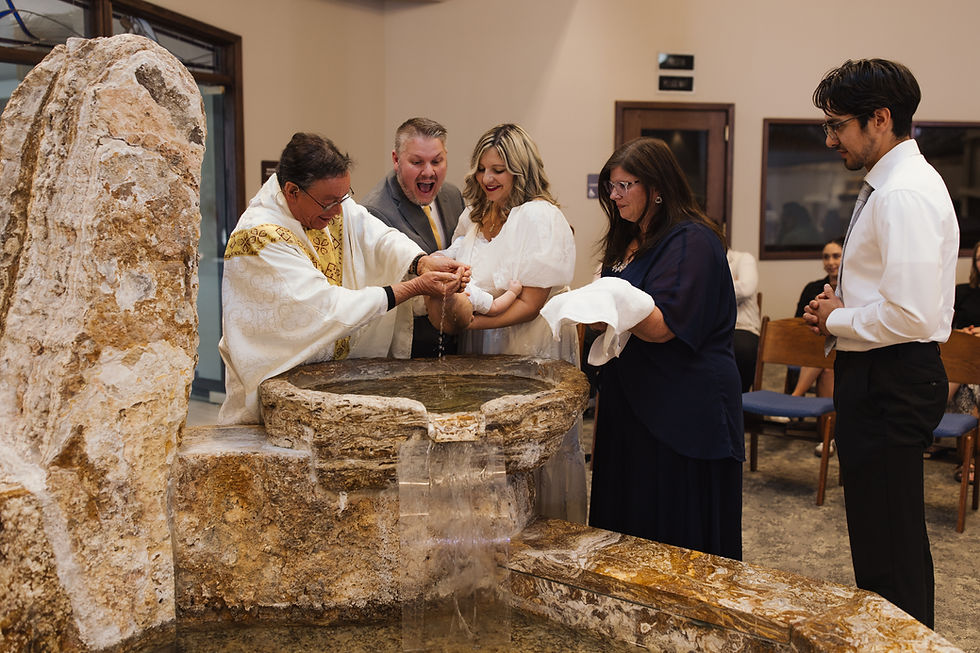
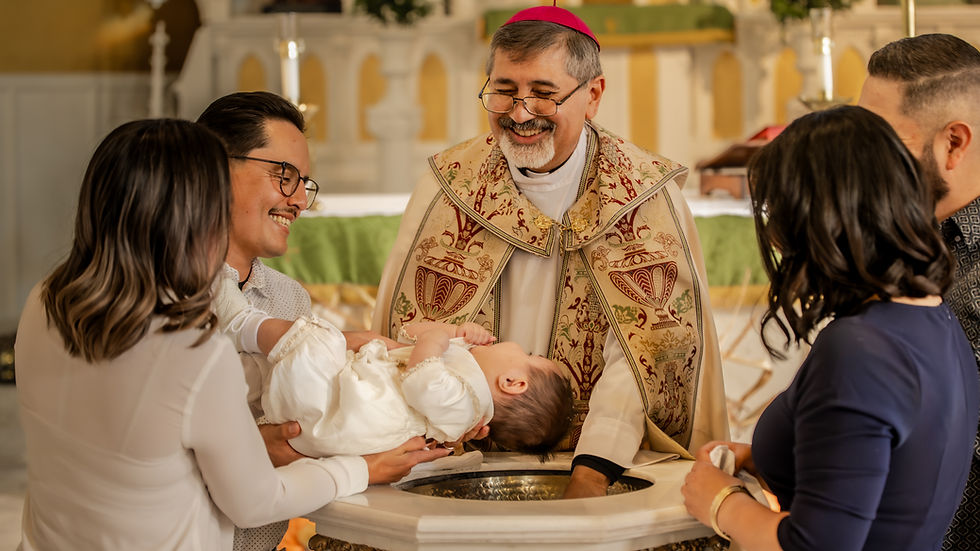
Many people know that a godparent stands beside the family during the Baptism ceremony. Fewer people understand what happens in the sacrament and what the Church hopes will continue long after that day.
The Church teaches that a godparent is someone chosen to help the baptized person live the Christian life faithfully. Godparents assist parents in nurturing the faith of their child and serve as spiritual companions throughout life. A godparent is not chosen simply because they are loved. They are chosen because they can help someone grow closer to Christ.
In a culture that often focuses on celebrations, the Church reminds us that Baptism is the beginning of a new life in Christ, not just another event. Through Baptism, we become adopted sons and daughters of God, members of the Church and participants in the life of grace (CCC 1213).
The mission of a godparent is to help protect, nurture and encourage that life of faith. The Catechism of the Catholic Church describes godparents as “firm believers, able and ready to help the newly baptized — child or adult — on the road of Christian life” (CCC 1255). Godparents’ jobs don’t end when the sacramental celebration concludes. Their spiritual mission is only beginning.
What Does a Godparent Actually Do?
A godparent's role is beautifully simple:
Pray for the child and parents
Encourage the practice of the faith
Be a witness of Christian life
Walk with the child through important moments of faith and discipleship
Accompany the child toward holiness
Help the child remember who they are: a beloved son or daughter of God
The role is less about attending a ceremony and more about accompanying a soul, helping them to reach Heaven. A godparent should be able to say something like: “I will help this child learn to love God, follow Christ, live as a disciple and one day stand before the Lord as a saint.”
Why Does the Church Care Who is Chosen?
Sometimes families experience disappointment when they discover that a beloved relative or friend cannot serve as a godparent. “Why is the Church making this difficult?” they might ask. But perhaps the better question is: “Why does the Church take this role so seriously?”
Imagine asking someone to teach your child piano who has never learned to play. Or asking someone to coach a team in a sport they have never practiced. The Church believes that faith is precious. If a godparent is being entrusted with helping someone live the Catholic faith, then it makes sense that they should be actively living that faith themselves. The requirements are not about exclusion but mission. The Church is not trying to keep people out. She is trying to ensure that those entrusted with this responsibility are capable of fulfilling it.
Dispelling Some Common Myths
Over time, many cultures have attached additional expectations to the role of godparent. Some of these traditions are beautiful. Others can unintentionally distract from the true purpose of the vocation.
Godparents are not primarily financial sponsors.
In many communities or families, godparents are often expected to contribute financially to celebrations such as Baptisms, quinceañeras, Confirmations or weddings. Generosity is a beautiful gift, but financial support is not the mission of a godparent. The Church asks for something greater than financial support from godparents: that they help another person attain holiness, that is, to become a saint.
Godparents are not automatically future guardians.
In other communities or families, people often assume that godparents will raise the child if the parents die. While parents may choose the same individuals for both roles, guardianship is a legal responsibility, not a sacramental one. The Church’s concern is not primarily who would raise the child physically, not because that is unimportant, but because there is an even deeper concern: who will help the child know, love and remain faithful to Christ? That question may be one of the most important and least considered questions in our culture today.
Who Can Be a Godparent?
The Church outlines the qualifications and responsibilities of godparents in Canons 872–874 of the Code of Canon Law. A godparent must:
Be a baptized Catholic
Have received Confirmation and the Eucharist
Be at least 16 years old (unless an exception is granted)
Be living a life consistent with the Catholic faith
Be willing and able to fulfill the responsibilities of the role
Not be the father or mother of the person being baptized
And if I may add one more:
Understand the beauty and mission of what they are being asked to do

Why Must a Godparent Be Catholic?
Because the mission of a godparent is specifically Catholic. A godparent is not simply a mentor, role model or supportive adult. A godparent is entrusted with helping another person live the Catholic faith, participate in the sacramental life of the Church and remain faithful to Christ. The Church is not questioning whether non-Catholics are good people. Rather, she recognizes a simple truth: one cannot pass on what one does not personally profess and strive to live.
Why Must Godparents Live the Faith?
This question often emerges when discussing Catholic marriage, Mass attendance or other aspects of Catholic life. Canon 874 requires that a godparent lead a life of faith so that they can share that faith. A godparent should be striving to follow Christ and his Church because faith is transmitted not only through instruction, but through witness. Discipleship is caught as much as it is taught. Children and young people learn not only from what we say but from how we live. The Church is not asking for perfection but authenticity.
The Deeper Invitation
Perhaps the most important question is not “Who qualifies to be a godparent?” but rather: “Who is helping us become saints?” When the Church speaks about godparents, she is ultimately speaking about discipleship, accompaniment and spiritual family. She is asking parents to identify someone who will help them carry the beautiful responsibility of leading their child to Christ.
Maybe that is why the conversation matters so much. Because at the heart of Baptism is not a requirement but a promise. A promise that God has claimed this child as his own. A promise that the Church will walk with this family. A promise that godparents, together with parents, will help that child discover the greatest truth of all: that they are deeply loved by God and called to become a saint.
So perhaps the final question is this: If godparents are chosen to help lead someone to Heaven, who in my life is truly capable of helping another person make that journey? Or perhaps an even more personal question: If I have been chosen to be a godparent, am I willing to do more than stand beside the baptismal font? Am I willing to walk with someone on their journey to Heaven?