
From Sinkhole to Bridge: Mount Olivet Reopens its Dam Crossing

A repair that grew into a two-year project leaves the cemetery safer and more beautiful for the families who come to pray for their dead
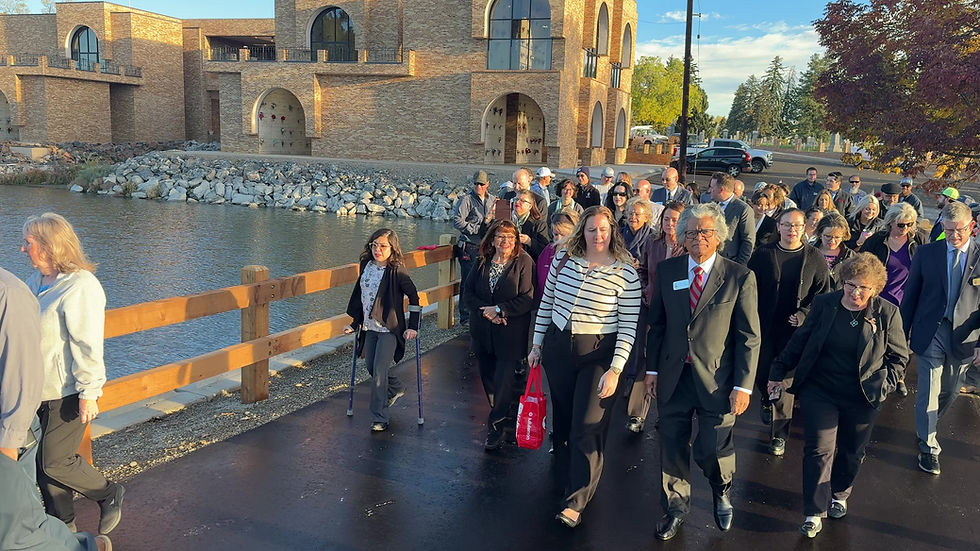
For more than two years, the road across the dam at Mount Olivet Catholic Cemetery in Wheat Ridge was closed, fenced off around a hole that had opened without warning. On Oct. 23, that road opened again.
Catholic Funeral & Cemetery Services of Colorado, a ministry of the Archdiocese of Denver, held a ribbon-cutting for the rebuilt dam bridge, completing a project that began with an unsettling discovery.
On Sept. 9, 2024, cemetery staff found a large sinkhole in the roadway that crosses the cemetery’s nearly 100-year-old dam. The crossing was closed immediately.
“It was scary, actually, because it was pretty deep,” said Gary Schaaf, executive director of CFCS of Colorado. “Thank God nobody fell in there.”
The cause was traced to aging irrigation pipes running through the dam. For years, the pipes had leaked into the surrounding soil, slowly washing it away until the ground above collapsed.
A Bigger Job Than Expected
What first looked like a simple repair grew once engineers, including Colorado’s state dam safety engineers, took a closer look. Patching the hole would not be enough. The dam itself needed work to remain sound for decades and to withstand severe flooding.
The historic Reno Ditch added another layer. The irrigation channel runs through Mount Olivet but is separate from the cemetery’s water system, and its aging infrastructure needed upgrades to prevent leaks and keep the two systems apart.
In the end, crews removed the failing pipes, reinforced the dam, installed new drainage and monitoring systems, and built an emergency spillway designed to handle a 500-year flood. The plans went through several revisions and required close coordination with state officials.
One crew member said rebuilding a dam involves far more than moving dirt and paving a road. Every element, from underground drainage to concrete reinforcement, plays a part in keeping the structure — and the people who visit — safe.
It was a long process, but one that highlighted CFCS’ mission of loving service to those grieving and in need. At Mount Olivet, a dam repair became an opportunity to care for others.
Beauty in a Place of Mourning
A Catholic cemetery is more than property to be maintained. It is blessed ground, where the faithful are laid to rest in the hope of the resurrection. It is where families return to pray for the souls of those they love. Burying the dead is one of the corporal works of mercy, and caring for the place where they rest is part of that same work.
For Schaaf and the CFCS team, that meant fixing the problem was only part of the goal. They also wanted the finished crossing to reflect the character of Mount Olivet.
“We bring beauty and healing amidst the path of suffering,” Schaaf said, describing what a Catholic cemetery should offer grieving families.
Rather than simply restore what had been there, the team added new stonework, improved the landscaping and opened views of the ponds and green spaces around the bridge.
“We took this opportunity we were given from the sinkhole and turned it into the chance to do something beautiful and transcendental,” Schaaf said. “It’s just amazing.”
Built for Generations
Members of the construction team singled out Mount Olivet’s facilities and maintenance staff, who pitched in and offered encouragement throughout the project. They also spoke about who the work is ultimately for. As one crew member put it, the aim was to build something that would still be serving people 100 or 200 years from now.
Today, water has returned to the restored pond, and families can once again cross the dam on their way to the graves of their loved ones, on a road safer and more welcoming than the one it replaced.
Mount Olivet takes its name from the Mount of Olives, where Christ prayed in the garden on the night before he died. Those who come here to grieve also come to pray, and the new bridge is one more way the cemetery accompanies them on that path from pain to hope.