Following Christ to the Archdiocese of Denver: International Seminarians

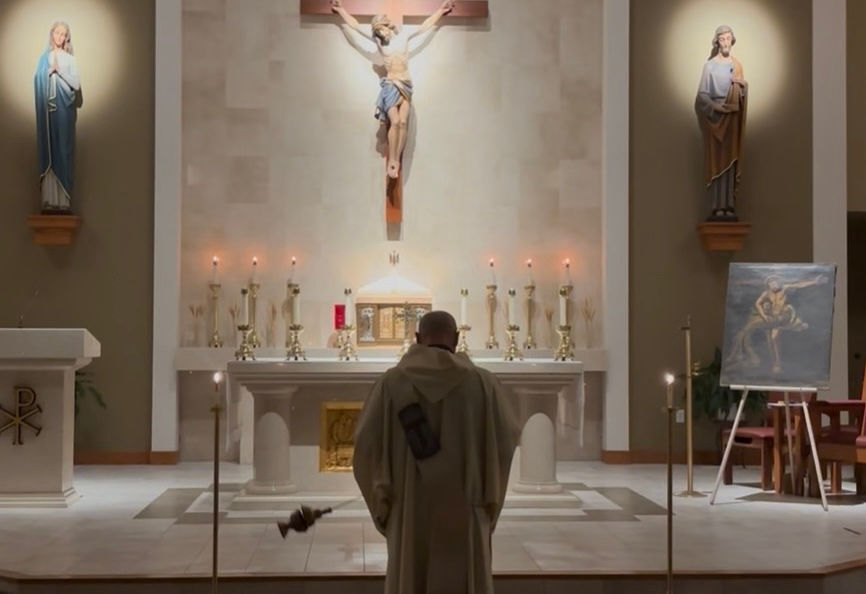
On a brisk morning in Denver, as sunlight shines through stained glass, a young seminarian kneels in prayer before Mass. Though his voice still carries an accent and rhythm of a country thousands of miles away, among these pews and parishioners, he is home.
A Calling That Began Thousands of Miles Away
Deacon Enrique Cruz Bautista of Mexico and seminarians Jeremiah Obiano of Nigeria and Joseph Trinh of Vietnam followed the Lord across continents to serve in the Archdiocese of Denver. But their vocations began long before they journeyed to the United States, with a faith that began in childhood.
For Deacon Cruz Bautista, the call came unexpectedly when he was a young teenager.
“It was not like most call stories,” he said. “I was not involved in any group at my parish, nor had I spoken with any priest about it. One afternoon, I was at home with my mom, my brother and an aunt, and I told them that I wanted to enter the seminary.”
Their response surprised him.
“They looked at me and said they supported me, and that is when this whole adventure between Jesus and me began,” he recalled.
Obiano explained that his parents were his first catechists, teaching him how to pray and lead the Rosary, and encouraging him to begin serving at the altar in the Church at age six. They enrolled him in a Catholic school, where they shared their joy and love for our Savior.
It was during those early years close to the sanctuary that, he said, “I first felt a quiet but persistent desire to give my whole life to God as a priest.”
Similarly, Trinh recalled that his parents and grandparents took him to daily Mass and Liturgy of the Hours while he was growing up. They encouraged him in his vocation at a young age, telling him he could one day serve as a priest. His pastor invited him to become an altar server and later allowed him to study with the clergy at the parish.
“I was blessed to meet some brothers and seminarians there, and learned about communal life and parish life, which all played an important part in my decision,” he shared.
Trinh also felt his vocation become stronger when caring for his father, who was sick with cancer, in his final years.
“I tried to encourage my siblings to pray every day and entrust everything to God,” he said. “When my father was called to God after two years, he received his last sacraments, and I wished that I could become a priest one day, to help care for the sick and comfort those who remained here.”
Although Deacon Cruz Bautista, Obiano and Trinh were born into different cultures thousands of miles apart, their vocations began the same way — within their family and parish life.
The Cost of Saying ‘Yes’ to Christ
Saying “yes” to the Lord is always a gift — but it is also a sacrifice. For international seminarians, that sacrifice includes a distance from their culture, family and familiar rhythms of life.
“Saying yes to formation far from my culture, family and home has not been easy,” Obiano said, reflecting on his journey so far. “Leaving Nigeria meant leaving the familiar warmth of my extended family, my language and the way we live the faith through community and celebration.”
Trinh agreed, adding that being far away from his family has had a real impact on him.
“I know that my godmother has been diagnosed with cancer and that my niece has just been born,” he said. “It does make me sad that I can’t be present to help console them during this time.”
“Leaving my family has been difficult at times,” Deacon Cruz Bautista said. “But they always tell me, ‘We have already lived our lives; now live yours. Do not hold back because of us. If you are happy, we will be happy too.’ That has strengthened me.”
In addition to the distance and cultural and familial transitions, another challenge is navigating a lengthy and uncertain visa process.
“Obtaining a visa to the U.S. is difficult. The process was long and uncertain, and there were moments when I wondered if the door would close,” Obiano said.
Deacon Cruz Bautista, Obiano and Trinh are grateful for their experiences, however, highlighting how they have helped them truly surrender to him.
“Wherever I have gone, I have always felt part of that place,” Deacon Cruz Bautista said. “God has always placed very good people in my life who have made me feel at home.”
“This struggle helped me to surrender more deeply to God’s will,” Obiano shared. “And to trust that if he was truly calling me to serve his Church here, he would make a way.”
“It is hard, but I have offered everything to God,” Trinh said. “And, I will continue to pray for my family.”
What International Seminarians Bring to the Church in Denver
Though they come from different cultures and continents, the men say the Church in Denver has quickly become home.
“What has surprised me the most is the openness and warmth of the people in the Church in Denver, and their real hunger for a deeper relationship with Christ and his Church,” Obiano said.
“I have also been struck by the beauty of the place itself, especially the mountains, and how many people encounter God in the silence and grandeur of nature,” he added. “This has helped me to appreciate how the Lord speaks through both creation and community, and it has renewed my own gratitude for the universality of the Church.”
For Deacon Cruz Bautista, Denver has held a special place in his heart for some time.
“From the first time that I visited my family in Denver, I fell in love with this place and always hoped that one day I might stay here,” he said. “God prepared me and then brought me here. This archdiocese represents a place of hope and great love for me. Truly, knowing that I am part of this place fills me with immense joy.”
“The faith I have encountered in Denver is very deep,” Trinh said. “The people here truly desire to know Christ.
“Although I come from another culture and clearly see the differences, I will never regret my decision to serve the Church and the people here,” he continued. “I have met so many amazing parishioners. They have prayed for and offered to help me in various ways, and it has been so appreciated.”
Obiano added that growing up in a devoted Igbo Catholic community in Nigeria has deeply shaped how he will serve the Church in Denver.
“Growing up in that environment taught me that the Gospel must touch everyday life, and that no one should feel alone in the Church. I hope to bring that same spirit here: to help build parish communities where people feel accompanied and seen, to share a joyful love for the sacraments and to witness to the strength that comes from families and communities who pray together,” he said.
“I often carry in my heart the people I will serve here in Denver,” Obiano shared. “My constant intention is that the Lord will make me a priest who listens, who is close to the poor and the suffering and who preaches the Truth with charity and joy.”
Trinh said that growing up in the Church in Vietnam and now coming to Denver has made him feel like God’s servant, and that he is just grateful for the privilege.
“I’m praying for everyone in the Church, for integrity and peace, both here and across the world,” he shared.
Trinh added that he came to the U.S. to serve, and that he hopes to lead others closer to the Church and to God one day soon.
“I’ve met people and heard stories from those who have fallen further away from the Church,” he shared. “So I hope to help them in the future, to help lead them back home.”
“In Mexico, we know how to welcome those who are different from us, and we know how to love them. This encourages me to do the same — to learn more about diverse cultures here and to work with them in unity,” Deacon Cruz Bautista said.
He added that he often prays the surrender prayer attributed to St. Charles de Foucault.
“With this prayer, I have asked the Lord to continue shaping me so that I may be an excellent disciple, always serving in obedience,” he explained. “It reminds me that I am a disciple in the making and that I must also build a community of disciples.”
In parishes across the Archdiocese of Denver, these young men will continue their formation, preparing to one day serve as priests for the people of Northern Colorado. Their voices may still carry echoes of Mexico, Nigeria and Vietnam, but their sacrifice and mission to serve God and his people are the same.
As Obiano said, “Though we come from many cultures and nations, may we be one in Christ and become a living sign of the Kingdom of God in this place.”