
Energy and Environment: Caring for Creation and Future Generations

Catholic Social Teaching calls for responsible stewardship of the environment while recognizing the needs of families and vulnerable communities. Here's how that responsibility shapes the Colorado bishops' public policy priorities.
Part 9 of a 10-part series on the Colorado bishops' public policy priorities
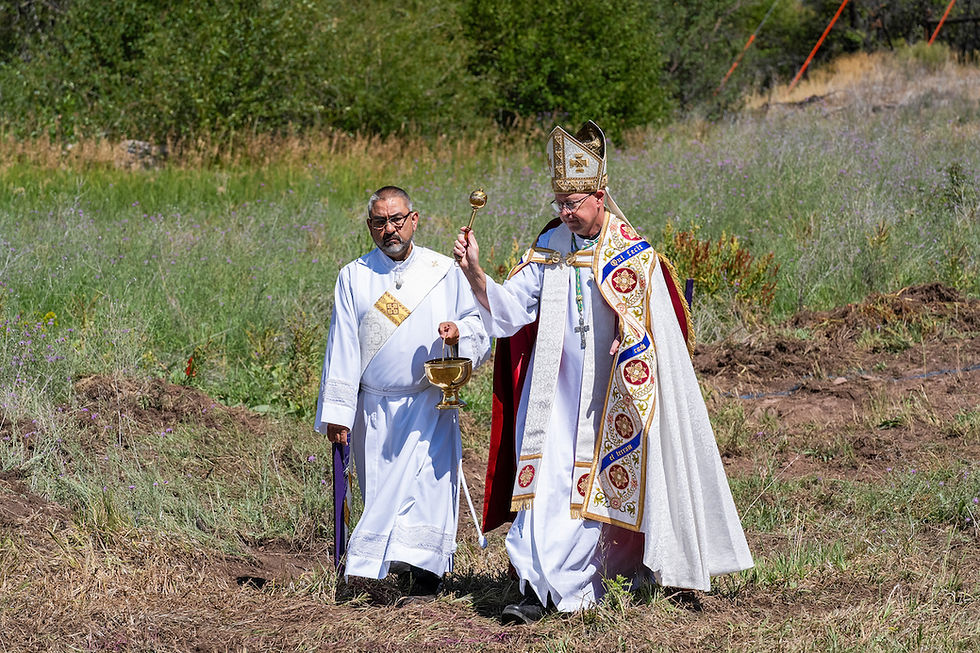
Care for the environment and responsible use of energy resources come from our duty to steward God's creation and provide for future generations.
The Catholic Church teaches that the earth and its resources are gifts from God, entrusted to humanity for responsible use and care. This responsibility includes protecting the environment while ensuring that individuals and families have access to the resources they need to flourish.
As the Catechism of the Catholic Church explains, “Man's dominion over inanimate and other living beings granted by the Creator is not absolute; it is limited by concern for the quality of life of his neighbor, including generations to come” (CCC 2415).
Catholic teaching recognizes that environmental stewardship cannot be separated from concern for human dignity, economic justice and the common good.
The Church's Teaching on Energy and the Environment
In 2015, Pope Francis published his encyclical Laudato Si', addressing care for our common home and the relationship between human and natural ecology.
In it, he wrote, “Today, however, we have to realize that a true ecological approach always becomes a social approach,” emphasizing the need to hear both the cry of the earth and the cry of the poor (Laudato Si’, 49).
Laudato Si' provides theological and moral guidance for Catholics engaging in environmental issues, addressing environmental justice, economic responsibility and the dignity of human life through the stewardship of land, water and human health. The encyclical reminds Catholics that care for creation includes responsibility for the people and communities affected by environmental decisions, particularly the poor and vulnerable.
The United States Conference of Catholic Bishops (USCCB) also addressed these responsibilities in its 2001 statement, Global Climate Change: A Plea for Dialogue, Prudence and the Common Good.
The bishops wrote, “Action to mitigate global climate change must be built upon a foundation of social and economic justice.”
While the Church does not prescribe every scientific or political solution to environmental concerns, it teaches that energy and environmental policies must recognize humanity's responsibility to steward God's creation and care for future generations.
This requires balancing the protection of natural resources with the economic needs of families and communities, especially those most vulnerable to rising costs.
Energy and the Environment in Colorado
Given Colorado’s geographic diversity, from the Eastern Plains to the Rocky Mountains, lawmakers place great emphasis on maintaining the state's outdoor spaces while developing responsible energy practices.
Energy affordability is critical to allowing individuals and families to care for themselves, especially as the cost of living in Colorado continues to rise. It is imperative that lawmakers ensure that Coloradans can heat their homes and afford electricity.
In recent years, Colorado lawmakers have introduced measures to address rising energy costs for low-income households, including proposals to limit utility expenses based on income and provide assistance to qualifying families.
Other measures have focused on developing renewable and clean energy resources through grant programs for local governments.
Such efforts reflect the teaching of Laudato Si', recognizing the responsibility to care for God's creation and develop energy resources that are sustainable over the long term.
However, while the Church supports efforts to promote affordable and clean energy, some environmental regulations have raised concerns about the financial burdens placed on nonprofit and faith-based organizations.
Colorado's House Bill 21-1286, Energy Performance for Buildings, established energy benchmarking and performance requirements for certain large commercial, multifamily and public buildings, including diocesan-owned buildings used for ministry. The law requires qualifying building owners to monitor and report energy use and comply with performance standards, with financial penalties for violations. These requirements can be difficult for nonprofits, including faith-based organizations, to meet due to the significant costs of upgrading existing facilities.
Putting the Church's Teaching into Practice
For Catholics, discussions about energy and the environment should begin with humanity's moral obligation to steward the earth for future generations. In everyday conversations, Catholics can emphasize that care for creation is rooted in faith and responsibility for the resources God has entrusted to humanity.
Catholics should also be willing to engage with scientific findings, using them to inform discussions and evaluate environmental concerns.
When engaging with lawmakers, advocates should share their own experiences related to energy and environmental issues, especially how policies affect families, communities and those who are most vulnerable.
Environmental policy often focuses on reducing environmental impacts and sustaining natural resources for the future. Catholic Social Teaching calls for balancing these goals with concern for the poor and vulnerable. Some well-intentioned environmental policies can place undue financial burdens on low-income communities, making it essential to consider economic justice alongside environmental protection.
Ultimately, environmental justice and economic justice must be considered together. Public policy should respect both the responsibility to care for creation and the needs of communities most affected by environmental decisions.
For Catholics, stewardship means protecting God's creation while ensuring that families have affordable access to the energy and resources necessary to live with dignity.