
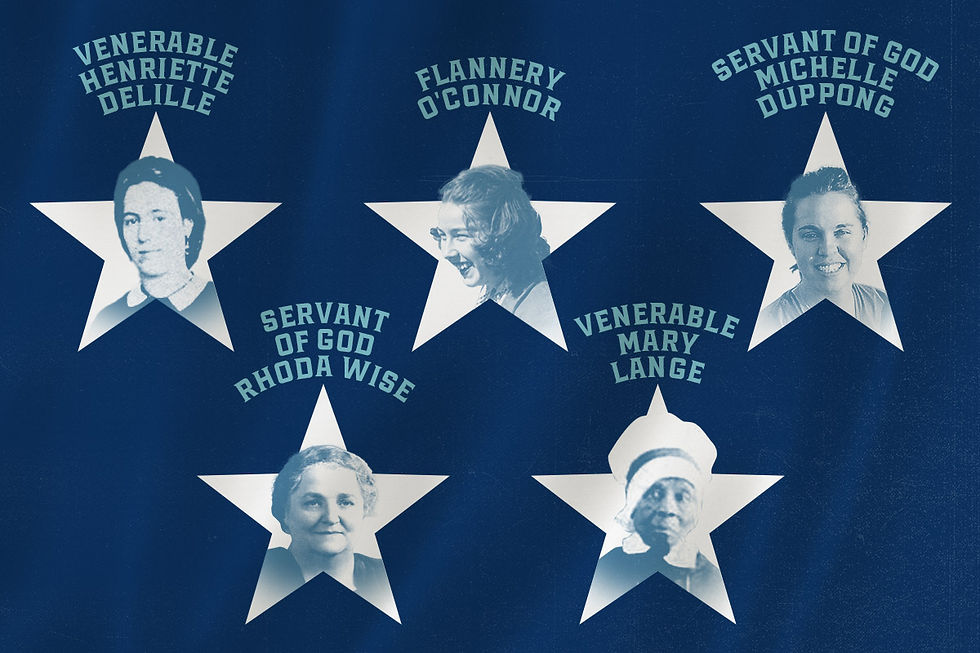
American Holiness: 5 Catholic Women Who Revealed Grace Through Suffering and Service

From a North Dakota missionary and a Southern Catholic writer to Black religious founders and a mystic healed by St. Thérèse, these holy women show how God transforms suffering into witness.
By Terry Polakovic
In every age and time, though much differs and changes, one thing remains steadfast: God raises up saints to manifest his loving kindness to his people. He inspires people to live holy lives, following him even to the Cross, in love for God and neighbor.
The same is true here, on our shores. In the United States’ 250 years, the Lord has called individuals, both canonized and uncanonized, to follow him and to lay down their lives for their neighbors.
And we are called to do the same.
Michelle Duppong
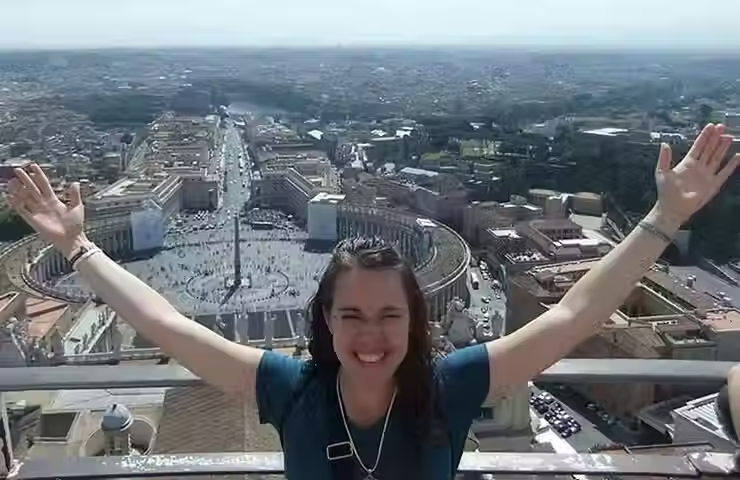
Michelle Duppong grew up on a family farm, nestled between prairie and rolling hills, in Haymarsh, North Dakota. She loved farm life for many reasons, especially how it nurtured her love of nature and of nature’s God.
As a young child, she fell in love with Jesus, radiated joy and wanted everyone she met to fall in love with Jesus too. That mission led her to become a FOCUS missionary, facilitate an ENDOW study group and serve the Diocese of Bismarck, North Dakota, as the director of adult faith formation.
In December 2014, Michelle’s life took a dramatic turn. She was diagnosed with Stage 4 cancer, beginning a yearlong journey that her sister described as “so awful, and also so beautiful and life-changing.” After the initial shock, she accepted everything with a docile spirit, saying, “If God wants me to go through this, I will go through this”.
Rather than challenge God, she gracefully accepted her suffering as a way of falling more deeply in love with Our Lord, pouring out her love on those around her until her death on Christmas Day 2015.
“We have no idea how many lives she touched that year because Michelle offered up her suffering for others,” her mother remarked.
Now buried in St. Clement Cemetery, which overlooks the farm, Duppong draws pilgrims from all over and reported miracles continue to grow. Her cause for canonization was opened in 2022, just six-and-a-half years after her death.
Flannery O’Connor
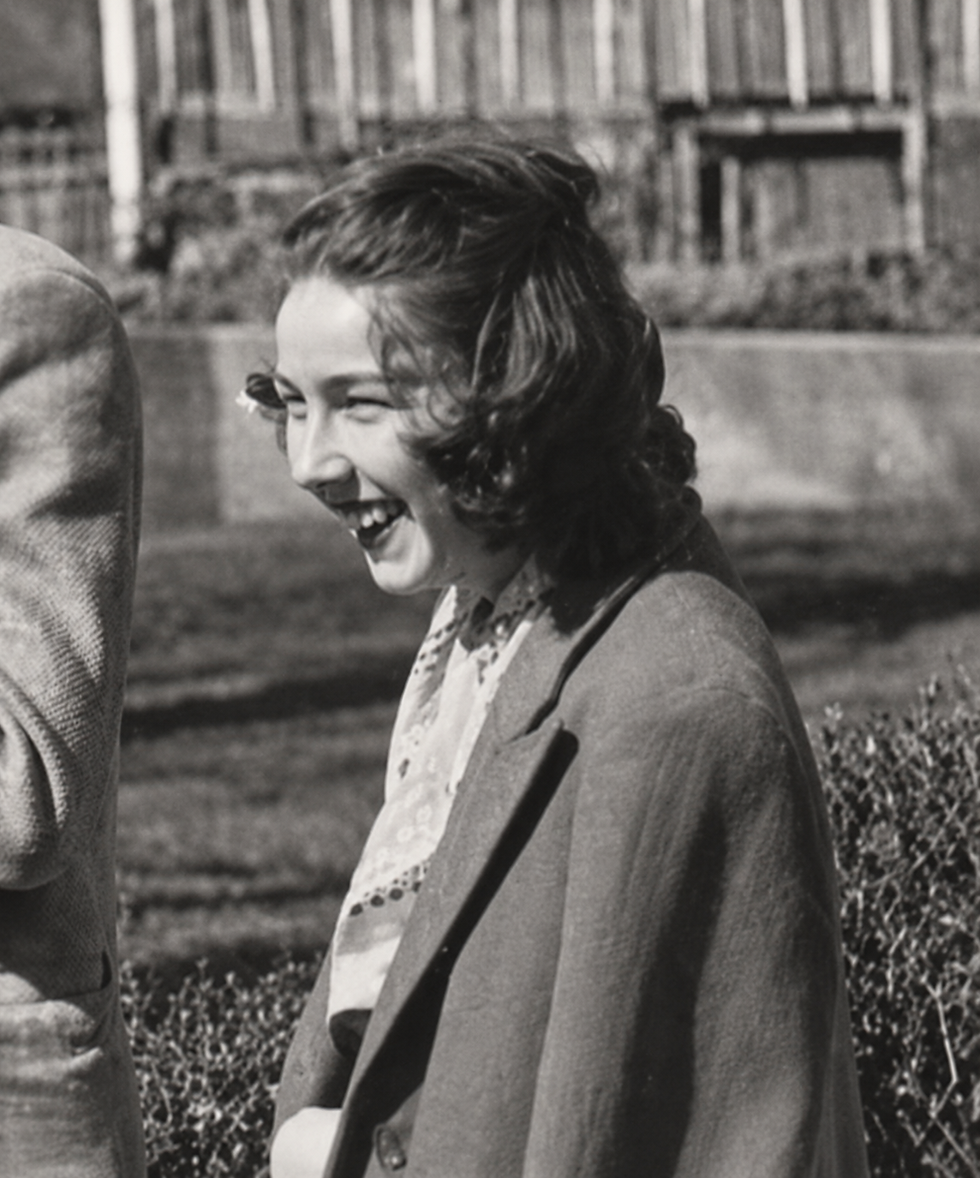
Mary Flannery O’Connor was born in Savannah, Georgia, on March 25, 1925, into two of Georgia’s oldest Catholic families.
Faith, art and creativity all found a home in O’Connor, even despite great suffering. Her father was diagnosed with lupus, a disease she would later suffer with, and died in 1940. Even still, she found joy in painting, drawing and creative writing, attending college in Georgia and working as a writer in New York.
When O’Connor received her own lupus diagnosis in 1949, she returned to the family farm at Andalusia, just outside of Milledgeville. She would remain there until her death in 1964. Yet, the disease seemed to shape her into a pilgrim whose writing revealed the true source of her gifts — Jesus Christ.
Distinguished for its unusual characters and grotesque features that distort and exaggerate reality, her fiction shocks complacent readers into reconsidering their understanding of reality. Through her physically disfigured characters, O’Connor amplifies each person’s own spiritual wounds and need for God. We are all crippled by sin and in need of grace — a message desperately needed for an audience who, for all its Sunday piety, did not fully share her belief in the fall of humanity and its need for redemption.
When asked why she used such violent and grotesque characters, she explained, “To the hard of hearing, [Christian writers] shout, and for the … almost-blind [they] draw large and startling figures” — a statement that has become a succinct and popular explanation of her conscious intent as a writer.
Today, O’Connor is considered one of America’s greatest fiction writers and one of the strongest apologists for Catholicism in the twentieth century.
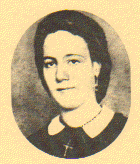
Venerable Henriette Delille
In 1812, Henriette Delille was born in a Creole cottage in the French Quarter of New Orleans to parents living under the plaçage system, a common-law arrangement between a white man and a free woman of color that offered financial stability, property and social standing without legal marriage. When Henriette’s father left her mother to marry a white woman, Delille saw the system for what it was — a social structure that commodified women of color.
Raised Catholic, Delille was prepared to become an accomplished young woman married to a wealthy patron. But she saw this path as a violation of the sanctity of Matrimony. From her Confirmation day, Delille made a personal, prophetic decision to “live and die for God,” which would lead her to religious life at a time when no Catholic religious order would accept women of color. Instead of abandoning her vocation, though, she founded her own order in 1842 — the Sisters of the Presentation, later renamed the Sisters of the Holy Family.
In opposition to racial exclusion, she created a community where Black women could serve, teach and minister with dignity. To this day, the Sisters of the Holy Family operate schools, nursing homes and retirement communities for the poor, sick and elderly throughout the South.
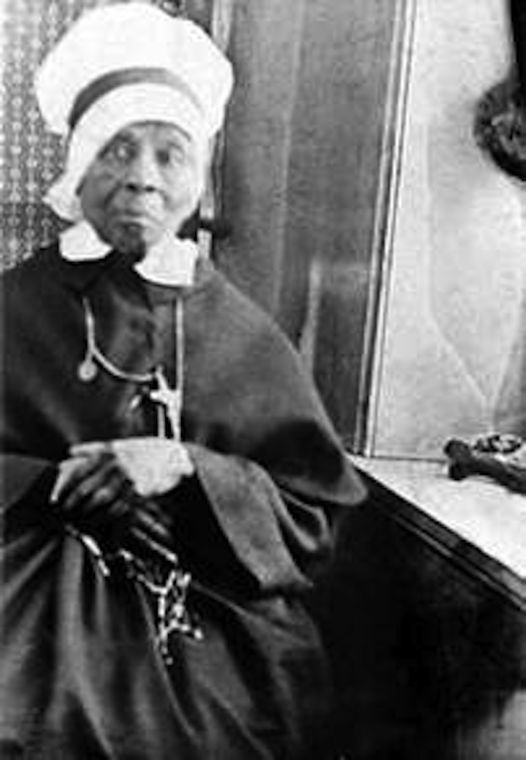
Venerable Mother Mary Lange
Little is known about the early years of Elizabeth Lange (later Mother Mary Lange), but she is believed to have been born in what is now Haiti. She, along with hundreds of others, fled during a revolution in the late 1700s.
By 1813, Lange moved to Baltimore, where a great number of Catholic, French-speaking refugees had settled. Well-educated and wealthy, she was courageous, loving and deeply spiritual.
Lange quickly realized that the children of her fellow immigrants needed education. Then a slave state, Maryland did not offer free public education for Black children. Without basic education, neither could Haitian refugee children learn the faith. With the help of her friend, Marie Magdaleine Balas (later Sister Frances, OSP), Lange opened and operated a school in her home for ten years.
In 1828, Father Joubert, SS, a Sulpician priest, proposed that Lange and Balas start a sisterhood with the primary mission of teaching and caring for Black children. The resulting Oblate Sisters of Providence became the first successful Roman Catholic sisterhood in the world established by Black women. The order would go on to found the oldest continually operating school for Black Catholic children in the United States, originally for girls only, though eventually co-ed, St. Frances Academy.
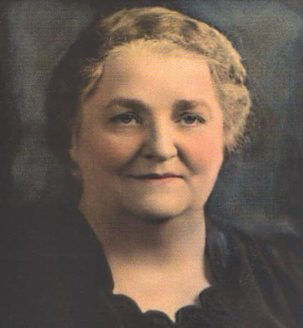
Servant of God Rhoda Wise
Born into an anti-Catholic, Protestant family and seriously ill throughout her life, Wise was graced by the presence and example of many sisters throughout her frequent hospitalizations.
At sixteen, while hospitalized for appendicitis, a Catholic sister gave her a St. Benedict medal. Unable to wear it due to her family’s anti-Catholic bias, the sister placed the medal in Wise’s locket, where she kept it hidden for the rest of her life.
Years later, she developed a 39-pound ovarian cyst that required a dauntless surgeon and several surgeries to remove, even amid serious complications.
As Wise’s suffering grew worse, the sisters at Mercy Hospital became a great source of consolation to her, caring for her physically and spiritually. One sister taught her to pray the Rosary and encouraged her to pray a novena to St. Thérèse. Her heart began longing for the Catholic Church.
On January 1, 1939, Wise entered the Catholic Church. The next day, she received her First Holy Communion. Two days later, she underwent another abdominal surgery, her last, which would leave her with an apparently incurable and very painful condition.
Soon after returning home and throughout the summer, Jesus began appearing to Wise. On several occasions, he brought St. Thérèse, who, during one visit, completely healed Wise by placing her hand on Wise's abdomen. In the years between Rhoda’s cure and her death, she saw Jesus and St. Thérèse over 20 times.
News of Wise’s miraculous healing spread. Thousands came to see her, gathering outside her home in hopes that Jesus would be present and they could bathe in his holy glow emanating from her bedroom.
Among the pilgrims was Rita Rizzo, the future Mother Angelica, who suffered from a painful, chronic “dropped stomach” condition. Urged to pray a novena to St. Thérèse, make a sacrifice and promise to spread devotion to the Little Flower, Rizzo was miraculously healed nine days later — an event that transformed her faith, led to her vocation and inspired the founding of EWTN.
From 1942 to 1945, Wise bore the visible stigmata every first Friday from noon to 3 p.m.
Hundreds of people who visited Wise were healed. Her daughter eventually turned her home into a shrine, where people still come today to pray.
Living Faith for the Next 250 Years
Mother Angelica, a holy woman herself, used to say, “We are all called to be saints! Don’t miss the opportunity.” Though they come from different backgrounds, these women have one thing in common: God presented an opportunity, and they responded with their “yes.” Not because they were qualified, but because God called.
“What does God want from me?” many people ask. Have you asked him? If yes, then listen closely for the answer. Really listen, because more often than not, God whispers. If you only hear silence, keep asking. In the meantime, do something! Do something to make the world a better place. The world needs you. We are all called to holiness.
All you holy women, pray for us.
Jody Benson of ENDOW contributed to this article.