
American Holiness: 5 Catholic Witnesses Who Made God’s Love Visible
From classrooms and family life to the firehouse, the media apostolate and the fight for racial healing, these holy men and women revealed Christ through lives poured out in love.
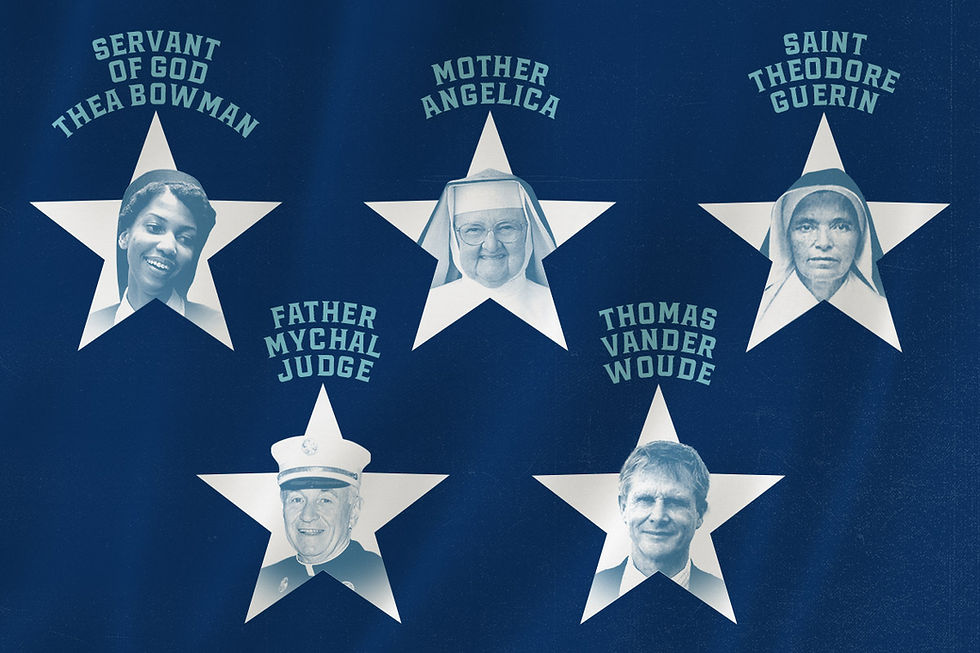
In every age and time, though much differs and changes, one thing remains steadfast: God raises up saints to manifest his loving kindness to his people. He inspires people to live holy lives, following him even to the Cross, in love for God and neighbor.
The same is true here, on our shores. In the United States’ 250 years, the Lord has called individuals, both canonized and uncanonized, to follow him and to lay down their lives for their neighbors.
And we are called to do the same.
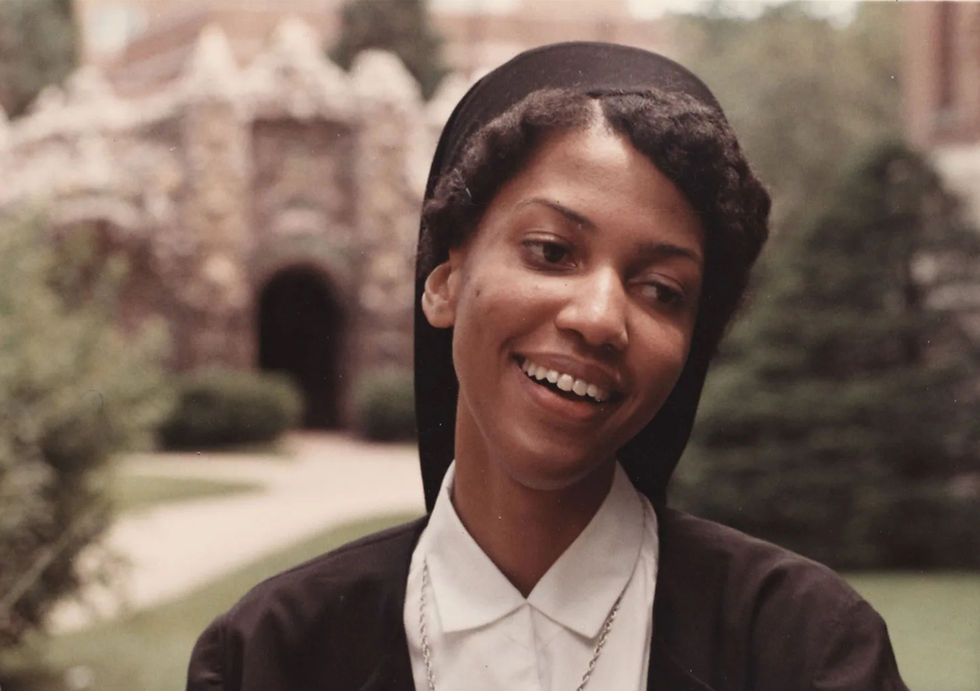
Servant of God Thea Bowman
Born in Yazoo City, Mississippi, in 1937, Thea Bowman grew up Protestant in the American South. She encountered the Catholic faith as a child, and at just nine years old, asked her parents if she could become a Catholic. They said yes. That yes would change her life.
Gifted with an extraordinary mind, a soaring voice and a magnetic personality, Bowman joined the Franciscan Sisters of Perpetual Adoration, becoming the first African American sister in her community. She taught for sixteen years at the elementary, secondary and university level before the Bishop of Jackson, Mississippi, invited her to serve as a consultant for intercultural awareness.
In that role, Sr. Bowman traveled the country giving lively presentations that wove together preaching, song and storytelling. She fought against racial and cultural barriers and was a witness to God’s love for all people.
In 1984, Sr. Bowman was diagnosed with breast cancer, but her ministry did not stop. She continued to speak internationally, gave television interviews and even filmed a documentary on her life. In 1989, she was invited to address the U.S. bishops at their national conference. From her wheelchair, she invited them to sing “We Shall Overcome,” a gospel song associated with the Civil Rights Movement. She passed away a year later, in 1990.
The Diocese of Jackson opened her cause for beatification in 2018. In February 2026, the diocese closed the diocesan phase of the beatification process, moving it to Rome.
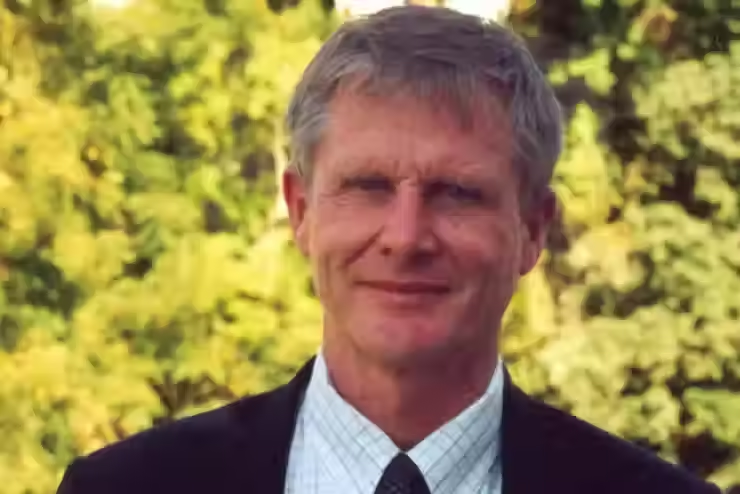
Thomas Vander Woude
Thomas Vander Woude grew up on a farm in South Dakota, the son of devout Catholic parents who gave him a love of the faith and a sense of responsibility that would quietly define everything he did. He served in the U.S. Navy, flew commercial planes, married his high school sweetheart, Mary Ellen, and raised seven sons.
His was a hidden holiness: the kind that shows up at 2 a.m. for a weekly Holy Hour, that helps clean the parish and that co-signs a loan for a neighbor in need of a home. One of his sons went on to become a priest.
In 2008, on the Feast of the Nativity of Mary, September 8, Thomas was winterizing his pool with his youngest son, Joseph, who has Down syndrome. When Joseph fell through a broken septic tank cover into more than 6 feet of sewage, Thomas called for help — and then jumped in after him. He held Joseph above the waste until rescuers arrived. Joseph survived, but Thomas did not.
More than 2,000 people attended his funeral, including more than 70 priests. Bishop Paul Loverde of the Diocese of Arlington, Virginia, called his death “truly saintly.” His cause for canonization is now under investigation by that diocese.
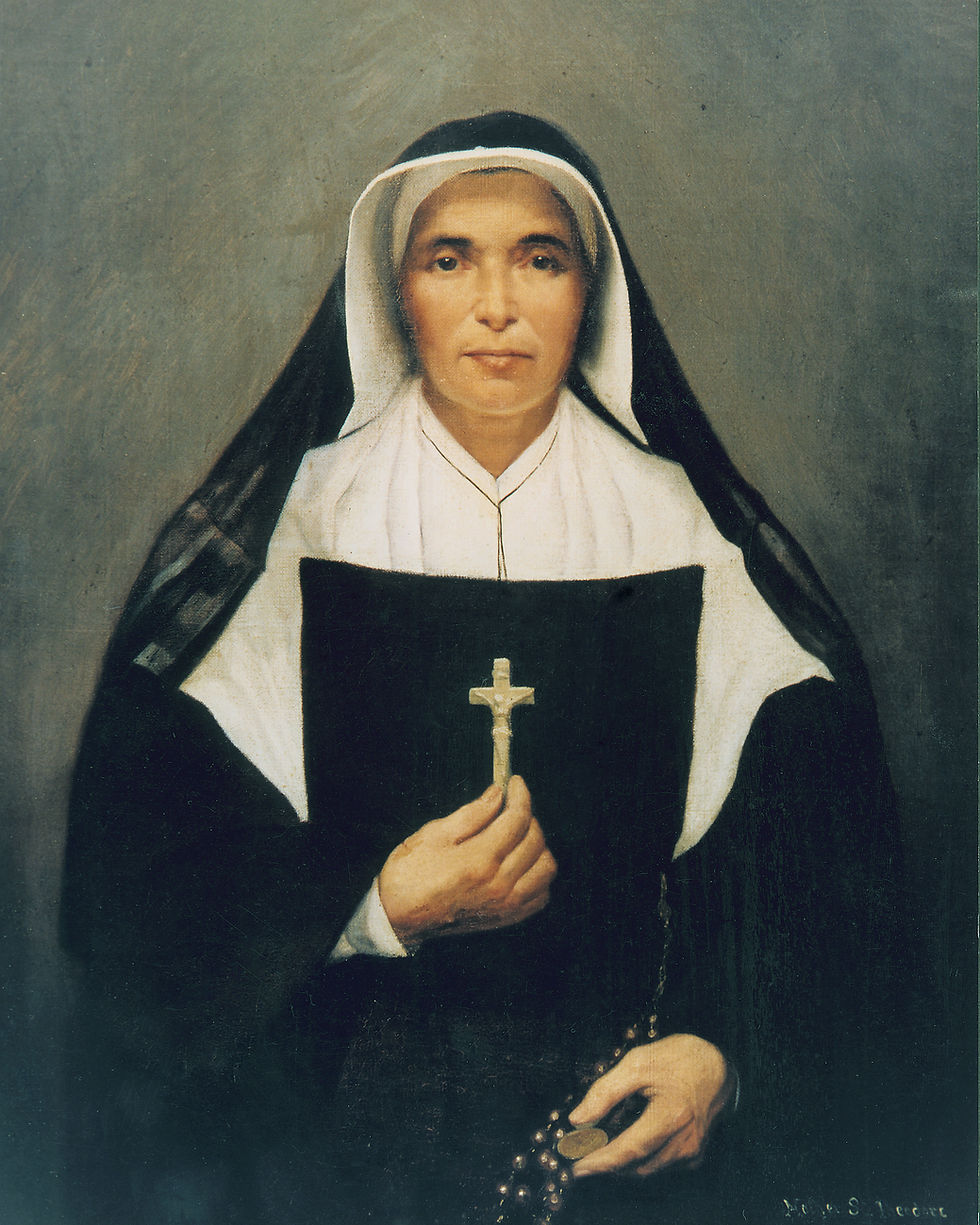
St. Theodore Guérin
Anne-Thérèse Guérin was born in Brittany, France, in 1798. By fifteen, she had lost two brothers to accidents and her father to bandits on the road. Her mother was shattered by grief and fell into a deep depression — leaving Anne-Thérèse to become head of the household, caring for her sister and mother, cooking, cleaning and working in a factory to support her family.
With her mother’s blessing, she joined the Sisters of Providence of Ruillé-sur-Loir and was given the name Sr. St. Theodore. When the Bishop of Vincennes, Indiana, needed sisters to serve the flood of immigrants arriving in the region, her superiors put her name forward. While she was initially hesitant due to ill health, she spent considerable time in prayer and discernment and agreed.
What she found on arrival in Indiana was close to nothing: remote forest, no school and bread frozen solid in the Indiana winter. In less than a year, she had opened an academy for girls. From there, she founded several more schools, orphanages and a free pharmacy. The first academy still exists today as St. Mary-of-the-Woods College.
Her philosophy of education was simple: “Love the children first, and then teach them.” She was canonized on October 15, 2006, and is dedicated in the Vatican’s official record as St. Theodora.
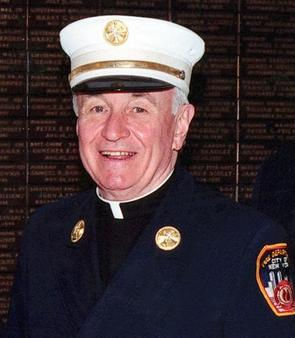
Father Mychal Judge
A Franciscan friar, priest and the chaplain to the New York City Fire Department, Father Mychal Judge lived at the friary of St. Francis of Assisi Church in Manhattan. Across the street was a firehouse. Whenever the trucks went out on a call, Father Mychal would go to the window, raise his hand in blessing and pray.
There were no limits to his love. He ministered to the homeless, AIDS patients, the wealthy and the destitute. A recovering alcoholic himself, he would often spend time walking with recovering addicts. He had a special devotion to Mary and kept a rosary in his car, which he prayed while driving. Friends and colleagues noted that he would literally give the clothes off his back to those in need: once stopping to give a homeless woman the jacket he was wearing.
On September 11, 2001, Father Judge rushed to the site of the World Trade Center attacks as soon as he heard the news. He prayed over the scene and the injured, then went inside the North Tower to anoint a dying firefighter. When the South Tower collapsed, debris struck and killed him.
Several firefighters carried his body out of the rubble and to the altar of St. Peter’s Catholic Church just across the street. He was later transported to the medical examiner, where he became the first certified fatality of the 9/11 attacks. When he died, a simple prayer was found in his pocket: “Lord, take me where you want me to go; let me meet who you want me to meet; tell me what you want me to say; and keep me out of your way.”
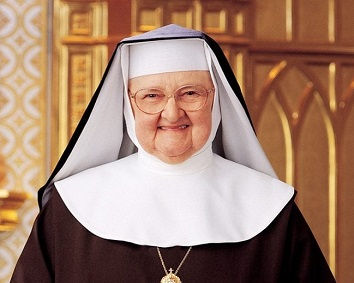
Mother Angelica
Mother Angelica was born in Canton, Ohio, in 1923, in a neighborhood shadowed by mob violence. Her parents’ marriage was troubled, and the family moved often through pest-infested apartments with little food. When she was just five years old, her father abandoned the family, and her mother began struggling with depression. The two scraped by on odd jobs, but food was difficult to come by.
She fell away from the faith for a time. Then, suffering from a painful stomach ailment that had left doctors without answers, she visited a local Catholic mystic named Rhoda Wise, who instructed her to pray a novena to St. Thérèse of Lisieux. After the novena, her symptoms vanished, and she decided to devote her life to Christ.
She entered the community of the Poor Clares of Perpetual Adoration in Cleveland at 21. As a young nun, she slipped on a wet floor and injured her back so severely that doctors told her she may never walk again. Mother Angelica made a promise to God: if she walked, she would build a monastery in the South. She walked.
Mother Angelica left for Birmingham, Alabama, where she sold fishing lures and roasted peanuts to keep the new monastery afloat. On August 15, 1981, she launched the Eternal World Television Network from a converted garage. EWTN grew to become the largest religious media network in the world, reaching 435 million households across more than 160 countries.
She suffered a severe stroke in 2001, and spent much of the final fifteen years of her life in silent prayer at the monastery in Alabama — a hidden life, at the end, not so different than where it began.
Loving Neighbor for the Next 250 Years
The stories of Servant of God Thea Bowman, Thomas Vander Woude, St. Theodore Guérin, Father Mychal Judge and Mother Angelica span classrooms, firehouses, television studios, the Deep South and a small town in Virginia. Their circumstances were different, but the logic of their lives was the same: God’s love, received and then poured out without reservation.
As the United States enters its next 250 years, the needs around us are no less urgent and the call is as clear as ever. God has always raised up holy men and women and he continues to do so today — are we willing to be among them? These five witnesses did not wait for extraordinary circumstances. They became extraordinary with what they were given, and so can we.