
Why Catholics Baptize Babies

Scripture, Tradition and the Church's understanding of salvation reveal why Baptism is not something children should have to wait to receive.
By Father Scott Bailey
Pastor
Risen Christ Parish, Denver
It’s a famous and dramatic scene: a new mob boss stands by as godfather as the film cuts back and forth between the godfather professing his Catholic faith and his henchmen carrying out heinous crimes. Baptizing a baby has never seemed so thrilling!
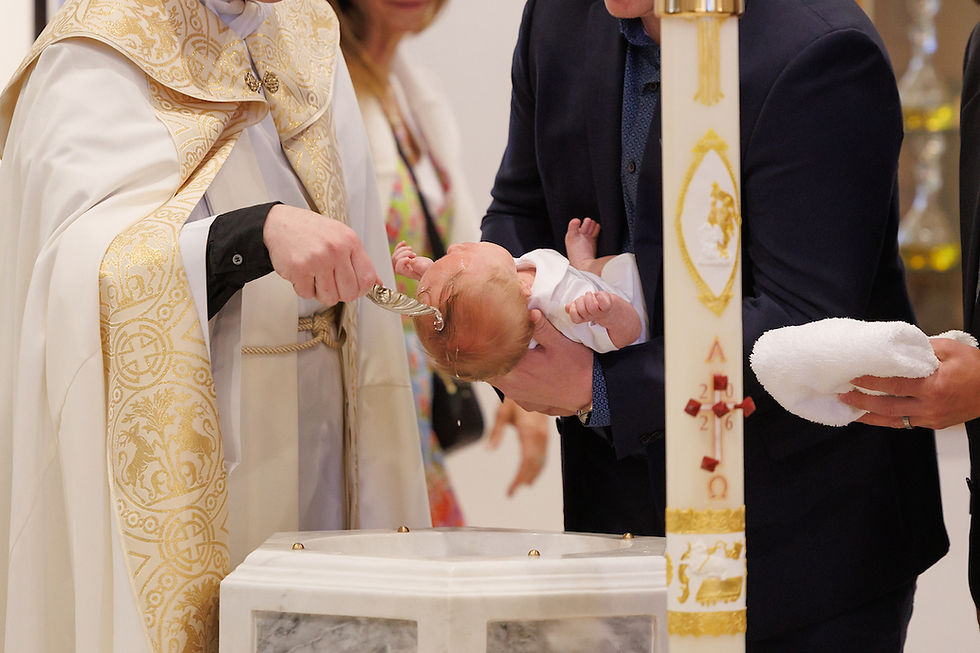
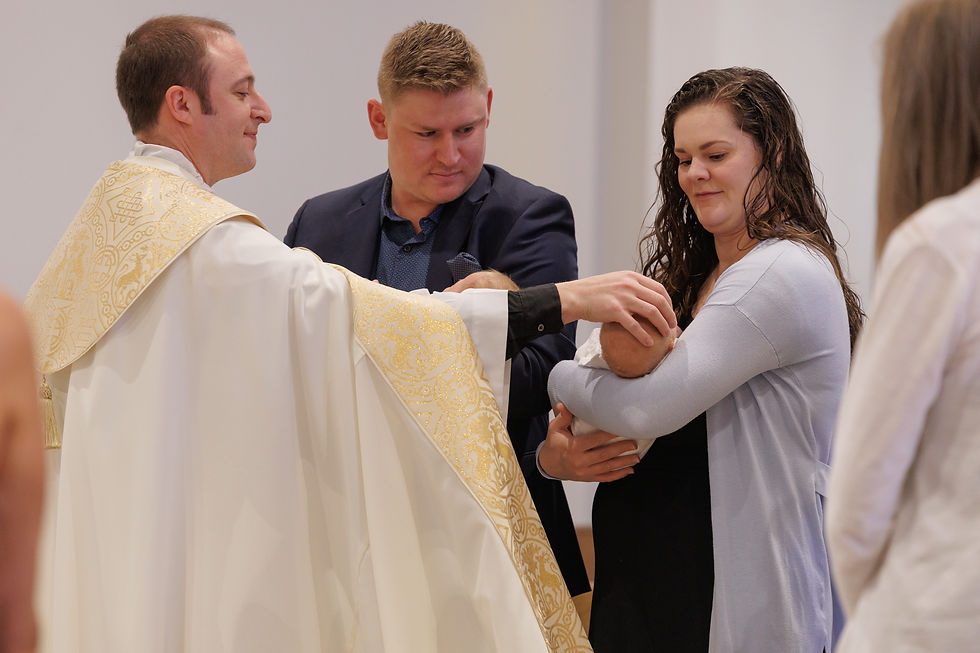
The Godfather’s portrayal of Baptism aside, the reality of baptizing a child does not normally seem very dramatic: the baby sleeps, the priest prays, the family takes pictures. It’s not usually exciting enough for Hollywood.
Despite the often peaceful, picturesque experience of a child’s Baptism, something dramatic is happening on the spiritual level. Baptism is one of the most significant moments in our relationship with the Lord, as it unites us to Christ and makes us a child of God.
We have a long tradition in the Church of giving the gift of Baptism to children, but not all Christian traditions baptize babies. Why do Catholics? Would it not be better to let our children grow up and choose for themselves when they are ready? Let us unpack the Catholic approach to this and discover why the Catholic Church continues to champion the baptism of infants.
The Testimony of Scripture and Tradition
While Sacred Scripture never explicitly describes the Baptism of infants, it certainly points to the expectation that children are to receive this sacrament.
In Colossians 2:11-12, St. Paul shows that Baptism has replaced circumcision in God’s plan for humanity. Before Jesus, circumcision marked a man’s entrance into the covenant relationship between God and his people. Adult men rarely received circumcision, as it was normally given to infant boys shortly after their birth. If St. Paul intended to exclude babies from Baptism, he would not have used circumcision as a metaphor to understand Baptism. Just as Jewish infants were brought into relationship with God through circumcision, Christian infants are brought into relationship with the Trinity through Baptism.
The Gospel of Luke tells us of parents bringing their babies to Jesus for his blessing (Luke 18:15-17). Even though they are infants and cannot approach Jesus on their own, Jesus says, “Let the children come to me … The Kingdom of God belongs to such as these.” Some Christians insist that children must make a conscious decision to be baptized, but this passage shows that the Lord is happy to bless the children presented to him by their parents.
Throughout the New Testament, we learn of entire households being baptized (i.e., Acts 16:15, 33; 1 Corinthians 1:16). It is reasonable to assume that such events would have included the Baptism of young children. The Catechism of the Catholic Church affirms this interpretation when it says that in the time of the apostles, “when whole ‘households’ received Baptism, infants may also have been baptized” (CCC 1252).
While there have been groups and individuals throughout history who have questioned the practice of baptizing infants, there is clear evidence that infants received Baptism as early as the second century (CCC 1252). This practice has been repeatedly encouraged by the Church throughout history, including by Early Church Fathers and multiple Councils.
The Purpose of Baptism
The history of infant Baptism is helpful, but it is not the best argument for why we should baptize babies. To get to the heart of the matter, we have to ask: What is the point of Baptism?
The short answer is this: Baptism saves us.
It is not merely a symbol. It is a sacrament, meaning it is a vehicle of God’s grace. Every human being is born into this world with a fallen nature tainted by original sin. Because of the fall of Adam and Eve, we are born into this world with a certain “broken” relationship with God, but Baptism is the remedy that restores that relationship. Baptism frees us from the power of darkness and brings us into “the freedom of the children of God, to which all men are called” (CCC 1250). Every person needs the spiritual regeneration offered by Baptism.
Children Deserve Baptism
If we deny Baptism to a child, then we would deny them “the priceless gift of becoming a child of God” (CCC 1250). But does that rob the child of their right to make that decision themselves?
Parents make all sorts of decisions for their children when they are young. Kids do not get to decide how they are fed, educated or cared for. Parents make foundational decisions for their children because they are responsible for nurturing the gift of life and providing the essential formation children need to navigate this world. That is never seen as robbing the child of their “rights” to eat what they want or go to school when they want. It is always seen as parents giving the child what is best for their development. Sharing the Lord with a child should be seen the same way. The gift of faith through Baptism is the greatest gift a parent can give to their child. This is part of a parent’s responsibility of nurturing “the life that God has entrusted to them” (CCC 1251).
Faithful parents want to see their children embrace the faith as they grow older. Children learn so much by praying with their parents, talking with them about the bigger questions in life and observing the life of faith modeled by their family. Godparents should also provide the necessary support and serve as an inspiring example of faith for the child (unlike the godfather in The Godfather!). By baptizing children as babies, we give them the graces they need to embrace that faith journey and eventually make their own commitment to the Lord when they grow older.
To our human senses, Baptism might not seem like much. The baby looks and behaves exactly the same before and after the sacrament. Even though we cannot see the change that happens during Baptism, a very real transformation has taken place in the child’s soul! Through Baptism, we are grafted onto Christ; we change from sinner to saint; we are permanently marked as a child of God. No movie can capture the spiritual drama happening in the soul during Baptism!