

Sanctity of Life: Protecting Human Dignity from Conception to Natural Death

From abortion and assisted suicide to the death penalty, the Catholic Church calls the faithful to defend the dignity of every human life. Here's what that means for Catholics in Colorado.
Part 1 of a 10-part series on the Colorado bishops' public policy priorities
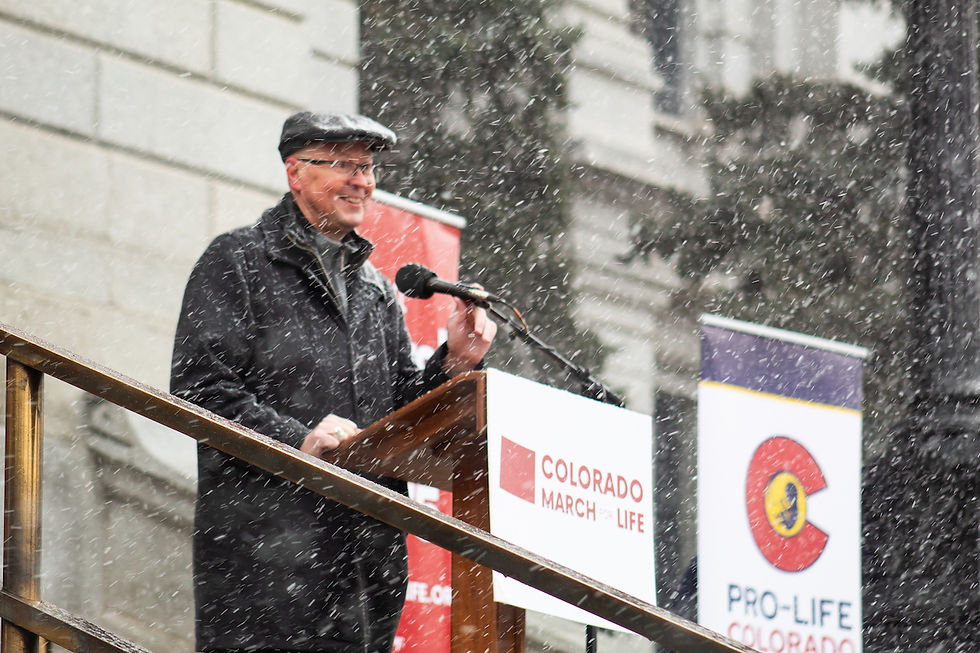
Human life must be protected at all stages, from conception until natural death.
The Catholic Church teaches that all human life is sacred because every person is created in the image and likeness of God. This inherent dignity does not depend on a person's age, health, wealth or abilities. Rather, life is a gift that belongs to God alone.
As the Catechism of the Catholic Church explains, “Every human life, from the moment of conception until natural death, is sacred because the human person has been willed for its own sake in the image and likeness of the living and holy God” (CCC 2319).
This teaching provides the moral framework for the Church's defense of human life across a wide spectrum of issues. The Church rejects abortion, euthanasia and assisted suicide as the intentional taking of innocent human life, while also calling for the protection of society's most vulnerable.
The bishops of Colorado and the United States Conference of Catholic Bishops have identified the protection of unborn life as a preeminent priority in public policy, recognizing the fundamental dignity and right to life of every human person.
The Church's Consistent Defense of Life
The Church's teaching on the sanctity of life has been articulated and reaffirmed through centuries of Catholic tradition.
In his 1968 encyclical Humanae Vitae, Pope St. Paul VI explored the relationship between love, marriage and procreation, including the moral concerns surrounding artificial contraception.
Pope St. John Paul II expanded upon this foundation in his 1995 encyclical Evangelium Vitae, providing a comprehensive defense of human life against modern threats, including abortion, euthanasia and capital punishment.
Together, these papal encyclicals help articulate the theological framework calling for the active protection of human life from conception to natural death.
This commitment also informs the Church's opposition to capital punishment.
Pope St. John Paul II taught in Evangelium Vitae that cases requiring the execution of a criminal should be “very rare, if not practically nonexistent.”
In 2018, the Catechism was revised to teach that the death penalty is inadmissible because it violates the dignity of the human person. This reflects an increasing awareness that human dignity is not lost even after someone commits a serious crime, as well as the development of more effective detention systems that protect society without depriving offenders of the possibility of redemption.
The Catechism now states that the Church “works with determination for its abolition worldwide” (CCC 2267).
The Sanctity of Life in Colorado
In Colorado, many existing laws do not reflect the Church's moral teaching regarding the sanctity of human life.
In 2022, the state passed the Reproductive Health Equity Act (House Bill 22-1279), establishing a statutory so-called right to abortion. Colorado expanded its abortion laws in 2023 through several measures, including legislation banning abortion pill reversal treatment, requiring certain private insurance plans to cover abortion and protecting access to abortion services in Colorado.
In 2024, Colorado voters approved Amendment 79 with 61.9% of the vote. The amendment established a constitutional so-called right to abortion and removed the state's constitutional prohibition on public funding for abortion.
Lawmakers subsequently passed additional abortion funding measures in 2025, including Senate Bill 25-183, which allocated an annual appropriation of $2.9 million (in 2026) in taxpayer dollars to cover abortion in the health insurance plans of public employees, and Senate Bill 25B-002, which provided an additional annual $4.3 million state allocation for abortion providers, including Planned Parenthood.
Together, these policies have expanded abortion access and allocated millions of dollars in taxpayer funding in Colorado. The Colorado Catholic Conference has been a vocal opponent of each measure to expand and fund abortion.
Colorado has also legalized and expanded access to physician-assisted suicide.
In 2016, voters approved Proposition 106, allowing qualifying terminally ill individuals with a prognosis of six months or less to obtain medication intended to end their lives. Lawmakers expanded the law in 2024 through Senate Bill 24-068, which reduced waiting period from 14 days to 7 days (in some cases 48 hours) and changed other requirements.
From the Church's perspective, physician-assisted suicide disregards the dignity of human life, particularly among society's most vulnerable, and undermines the patient-doctor relationship.
Not all developments in Colorado have conflicted with Catholic teaching, however.
In 2020, Colorado abolished the death penalty, replacing capital punishment with life imprisonment without the possibility of parole as the state's most severe criminal sentence. The Catholic Church supported this measure as a means of protecting human life.
Putting the Church's Teaching into Practice
For Catholics, defending the sanctity of life is not limited to legislative debates. It begins with recognizing the inherent, God-given dignity of every human person.
In everyday conversations, Catholics can focus on the truth that a person's worth never changes based on age, health or stage of development.
This approach becomes even more powerful when presenting a consistent ethic of life, showing that the Church defends vulnerable people against abortion, elder neglect, poverty, human trafficking and other threats to human dignity.
When engaging lawmakers, Catholics should likewise emphasize the dignity of every person while sharing personal stories that illustrate how specific policies affect people's lives.
Presenting a consistent life ethic can help advocates demonstrate that their concerns extend beyond any single issue. Catholic advocacy also includes support for maternal health care, child tax credits, foster care, adoption and the elimination of the death penalty.
Advocating for specific legislative actions, such as safeguarding medical conscience rights or expanding resources for foster care and adoption, can move the conversation beyond abstract debates toward policies that protect human dignity at every stage of life.
Ultimately, the Church's defense of life calls Catholics to recognize and uphold the dignity of every human person, especially those who are most vulnerable, both in their everyday relationships and in the public square.