
Religious Liberty: Defending the Freedom to Live Our Faith

Religious freedom extends beyond the walls of a church. Here's how Catholic teaching on conscience, human dignity and religious liberty informs the Colorado bishops' public policy priorities.
Part 3 of a 10-part series on the Colorado bishops' public policy priorities
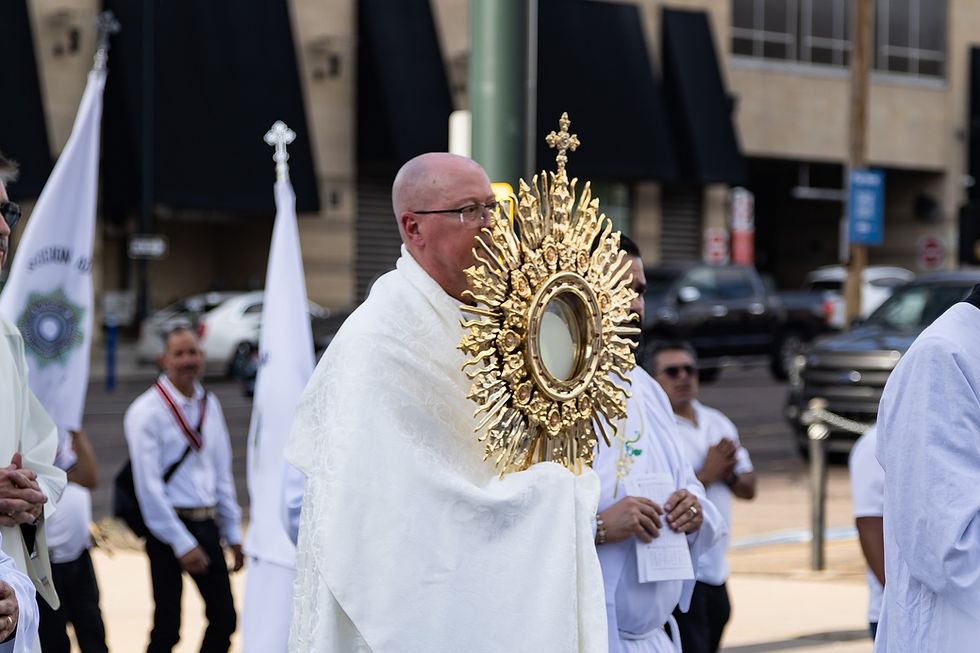
Religious liberty is rooted in the dignity of the human person, including freedom of conscience and expression, and is central to the U.S. Constitution.
The Catholic Church teaches that religious freedom is a fundamental human right, allowing individuals to live and act in accordance with their sincerely held beliefs, both privately and publicly.
As the Catechism of the Catholic Church explains, “This right is based on the very nature of the human person, whose dignity enables him freely to assent to the divine truth which transcends the temporal order” (CCC 2106).
Religious liberty is also vital to the common good, ensuring that Catholic schools, hospitals and charities can serve society without compromising their moral convictions.
The United States Conference of Catholic Bishops (USCCB) frequently highlights religious liberty as essential to the Church's public witness, allowing believers to propose moral truths regarding life, marriage and care for the poor for the flourishing of society.
The Church's Teaching on Religious Freedom
The Church's understanding of religious freedom is rooted in the inherent dignity of every human person.
In 1965, the Second Vatican Council promulgated Dignitatis Humanae, its Declaration on Religious Freedom, reaffirming the fundamental right to religious liberty. The document addressed truths also central to the U.S. Constitution, including the right to freedom of conscience and expression without government coercion.
With God-given, inherent human dignity at the core, Dignitatis Humanae also reinforced the limits of the state’s authority in matters of supernatural truth.
Religious freedom, properly understood, is not merely the right to worship within the four walls of a church building. It also includes the freedom to live and act publicly in accordance with one's sincerely held beliefs.
Religious Liberty in Colorado
In recent years, Colorado lawmakers have enacted several measures that have raised concerns about the religious integrity and autonomy of faith-based institutions and individual citizens.
These concerns include the ability of small-business owners, medical providers and faith-based schools to operate in accordance with their well-founded and sincerely held beliefs regarding human sexuality and marriage.
Since 2021, Colorado has expanded the Colorado Anti-Discrimination Act (CADA) through several legislative measures, beginning with House Bill 21-1108. In these laws, legislators added “sexual orientation, gender identity and gender expression” to protected classes and established financial and criminal penalties for violations of the anti-discrimination requirements.
More recently, in 2026, lawmakers introduced additional legislation concerning discrimination and religious expression.
Of particular concern was House Bill 26-1141, Discriminatory Practices in Public Schools.
The legislation addressed discrimination based on characteristics including disability, race, creed, sex, sexual orientation, gender identity and gender expression, while establishing procedures for responding to allegations of discrimination in educational settings. Under the legislation, students and employees accused of discriminatory conduct could be subject to grievance procedures and other enforcement measures, especially through the Colorado Civil Rights Commission. The law was amended in committee to include private schools. Near the end of session, it was amended again, rewriting the bill with language directly from CADA’s public accommodation clause, which means it could potentially include private and faith-based schools. The bill also considers "unwelcome communication” of a person’s “pregnancy” or “parental status” as forms of harassment on college campuses.
These developments raised serious concerns about whether faith-based schools and student organizations could face penalties or restrictions for expressing positions that conflict with the state's definitions of discrimination.
These concerns were heightened by House Bill 26-1335, Abortion Medication Access on College Campuses, which addressed access to abortion medication at public institutions of higher education. The bill, in concert with HB26-1141, will stockpile dangerous abortion drugs on college campuses and provide no alternatives to young women in crisis pregnancies.
The Conference also expressed concern that HB26-1141’s provisions affecting educational institutions could extend to privately operated faith-based schools, potentially threatening their religious integrity and autonomy.
CADA and its expansions remain a source of potential legal liability for Catholic hospitals, schools, homeless shelters and other faith-based organizations that provide public services.
For the Colorado bishops, these legislative developments underscore the importance of protecting religious liberty not simply as freedom of worship, but as the freedom to live one's faith in daily life and in service to others.
Putting the Church's Teaching into Practice
For Catholics, defending religious liberty begins with recognizing the dignity and freedom of every human person. In everyday conversations, religious freedom is best presented as an invitation to truth through the lens of human dignity.
Because true love requires a choice, God respects human freedom and never forces himself on anyone. Faith, by its very nature, cannot be coerced. When sharing the Gospel, Catholics can follow Jesus' example of gently proposing the truth and inviting others to "come and see."
Effective evangelization leads with personal witness rather than legislation, recognizing that faith must be freely embraced.
When engaging lawmakers, Catholics should likewise share their own stories and experiences to explain why religious liberty matters.
In the legislature, discussions often shift from sincerely held religious beliefs to the protection of civil rights. For this reason, advocates can present religious freedom as a foundational civil right, often called the "first freedom."
A government that respects religious liberty demonstrates a healthy limit on its own power, acknowledging that the human conscience belongs to a sphere the state did not create and cannot rightfully dominate.
The First Amendment protects religious freedom and the rights to speech and expression, allowing individuals and communities to practice their faith publicly, subject to applicable legal limits. Ultimately, protecting religious liberty means defending the right of every person to seek truth, follow conscience and live according to sincerely held beliefs.
For Catholics, that freedom makes it possible not only to practice their faith, but also to bring the Gospel into the public square through education, health care, charitable service and participation in civic life.