


PHOTOS: Bishop Rodriguez Calls Faithful to Be the Hands of Christ in an AI World on World Day of the Sick
- Guest Contributor
- Feb 19
- 4 min read

By Grant Whitty
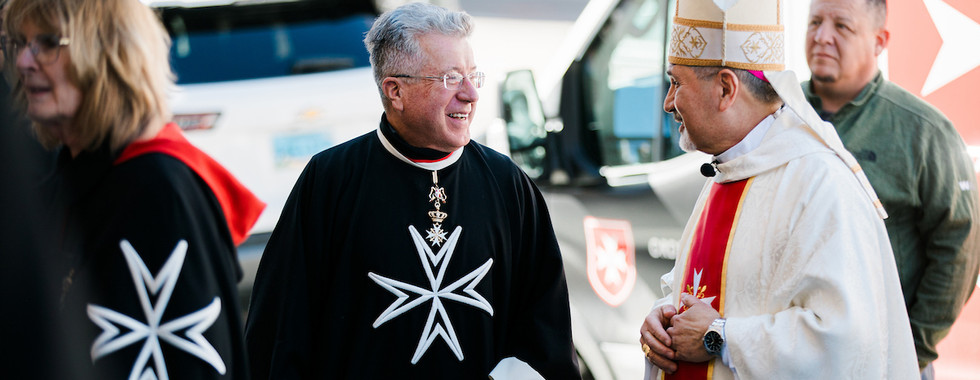
A large red banner bearing an eight-point cross murmured in the mild February breeze as the faithful ascended the steps of Denver’s historic Holy Ghost Parish for noon Mass. The cross symbolizing the eight Beatitudes is the emblem of the Sovereign Order of Malta, which sponsored Sunday’s special liturgy celebrating World Day for the Sick — February 11, the feast of Our Lady of Lourdes.
While incense rose to the sounds of voices and organ pipes, knights and dames of the Order of Malta processed in, followed by Father Paul Nguyen, the parish’s pastor, and Denver Auxiliary Bishop Jorge Rodriguez.
After reading the Scriptures for Sunday, Bishop Rodríguez climbed the steps of the pulpit and opened his homily on the topic of artificial intelligence.
“If you want any kind of information, one can ask ChatGPT a question, and it will give you a summary of all the knowledge on any given topic,” he began.
So much knowledge is “at one’s fingertips” through AI-deployed chatbots, but “algorithms, artificial intelligence and ChatGPT together will never be able to replace Divine Wisdom,” the bishop said.
Looking to the communion of saints and blesseds, Bishop Rodríguez spoke of the life of Blessed Concepción Cabrera de Armida, known simply as Blessed Conchita.
“She never went to a theology class or received any kind of particular formation. She was raised in a modest family in 19th-century Mexico and was taught the faith at home,” he explained. “She was a mother of nine children. She is most well-known for her writings; over 66 volumes of journals and letters. When you read her work, you will acknowledge the mystery of her mind, and her closeness to the Trinity.”
The life and writings of Blessed Conchita are an example of the kind of knowledge that can only come from God. Considered by many a mystic of the Church, Jesus revealed many spiritual insights to her in prayer, often on the theme of the Cross and the Eucharist. Today, her spiritual writings are frequently published in issues of the Magnificat.
“Some people predict that in ten years, most human jobs will be replaced, except for those that require human connection,” Bishop Rodríguez continued. “Divine wisdom is exactly that: connection to life, to humanity. In the Bible, Wisdom is the divine gift characterized by the appropriate application of knowledge for living one’s life in accordance with God’s will. While AI is knowledge, it is not man. Wisdom is always related to man.”








(Photos by Grant Whitty/Denver Catholic)
Sunday’s second reading from St. Paul’s first letter to the Corinthians touches on this theme well: “We do speak a wisdom to those who are mature, but not a wisdom of this age, nor of the rulers of this age who are passing away. Rather, we speak God’s wisdom, mysterious, hidden, which God predetermined before the ages for our glory, and which none of the rulers of this age knew” (1 Corinthians 2:6-10).
In a world where decisions are increasingly made by technology — a “technocracy” as Pope St. Paul VI coined in his apostolic letter Octogesima adveniens on the 80th anniversary of Pope Leo XIII’s Rerum Novarum — Bishop Rodríguez encouraged the faithful to constantly draw close to the source of all wisdom, Divine Wisdom, that is, intimacy with the living God through daily prayer.
“The Order of Malta has a rich tradition of serving the poor and sick. [That mission] is not inspired by the wisdom of this age — it is inspired by God,” Bishop Rodríguez stated. “Jesus touched people when he healed them. He was personally related to them. This is something AI can never do.”
Not only for the Order of Malta, but for all Christians, modeling Jesus’s personal and relational approach to serving the poor and sick becomes all the more essential, especially in an age where human connection is threatened by the artificial.
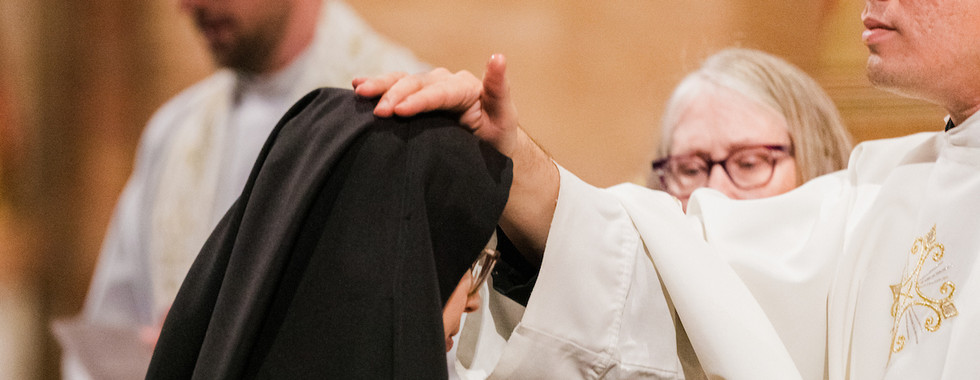
Following his homily, Bishop Rodriguez and a number of priests from Holy Ghost administered the Sacrament of Anointing of the Sick, with assistance from various knights and dames of the Order of Malta. Congregants came forward, received a blessing on their heads, followed by an anointing of their heads and palms with the Oil of the Sick. Holy Mass continued into the Liturgy of the Eucharist, and Bishop Rodriguez imparted a special blessing on members of the Order before closing the Mass.
The Mass for the World Day of the Sick evidenced Pope Leo XIV’s own exhortation in his message for the international occasion.
“Love is not passive; it goes out to meet the other. Being a neighbor is not determined by physical or social proximity, but by the decision to love,” the Holy Father wrote. “This is why Christians become neighbors to those who suffer, following the example of Christ, the true divine Samaritan who drew near to a wounded humanity. These are not mere gestures of philanthropy, but signs through which we perceive that personal participation in another’s suffering involves the gift of oneself. It means going beyond the simple satisfaction of needs, so that our very person becomes part of the gift.”


