From the Classroom to the Journey: A New Form of Marriage Preparation


At Holy Rosary Parish in Denver, a model of intentional accompaniment guides couples step by step toward a deeper experience of the sacrament of marriage.
In a culture where “forever” seems increasingly fragile and divorce has become almost an automatic response, the Church faces an urgent and profoundly human challenge: How can couples be better prepared to receive the sacrament of marriage and, even more, how can they be accompanied so that they remain faithful to their vocation?
We often think this mission falls solely on the priest, but we forget that God calls all of us to live charity, beginning with those who walk beside us.
This was the call that several couples at Holy Rosary Parish in Denver recognized and embraced. Today, responding generously and supported by a new method, they are witnessing abundant fruits among newly married couples.
God Calls
About three years ago, Francisco and Alma Villalobos, parishioners at Holy Rosary in Denver, heard a call from God that has now become a reality, with the support of the Archdiocese of Denver’s Office of Evangelization.
“My wife and I belonged to the prayer group, and sometimes young couples would approach us to ask for prayer and to ask questions. Since it happened often, we realized there was a need for a premarital ministry, because at that time there wasn’t one,” Francisco recalled.
At first, Francisco and Alma resisted what seemed to be God’s call. But God insisted in so many ways that they eventually decided to speak with their pastor, Father Frank García. To their great surprise, Father García had been praying for several months that God would send him help for the marriage ministry.
Even so, they faced another challenge: they did not feel sufficiently prepared for this mission. That was when they contacted Sandra Morales, associate director of marriage preparation and enrichment for the Archdiocese of Denver. By God’s grace, Sandra had been developing a unique concept of marriage preparation that complemented the call Francisco and Alma had perceived: a model based on the intentional accompaniment of couples.
More Than a Class: Intentional Accompaniment
“The goal is to help couples who do not know Jesus, or who know him only a little, to open themselves to God and, if possible, to that initial conversion of mind, heart and will through a new model of evangelization based on intentional accompaniment,” Morales said. “At the same time, we seek to help couples who have already experienced that conversion to grow in holiness and mission.”
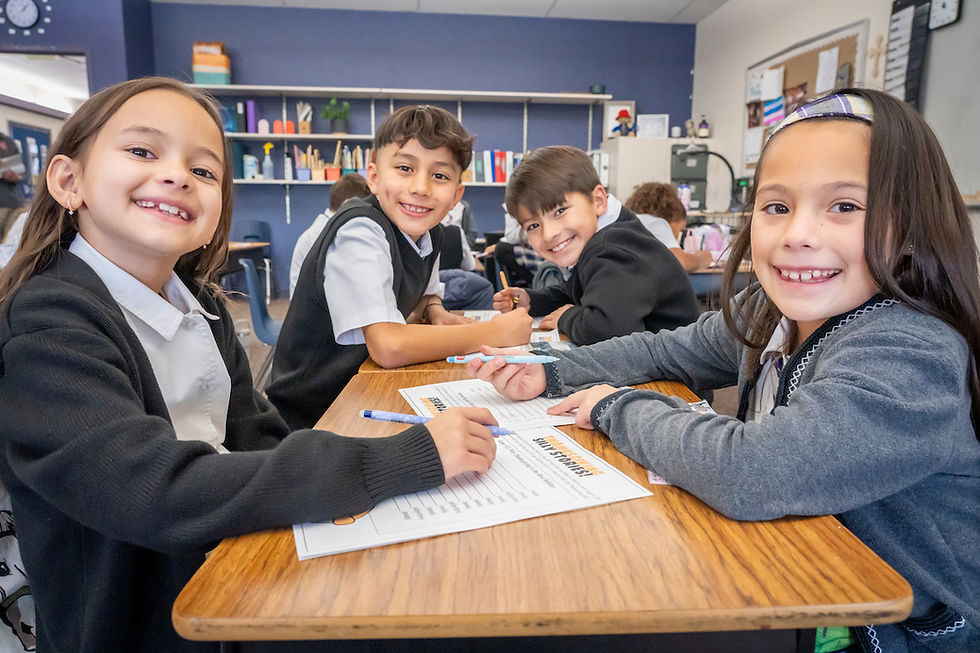
More than a class, intentional accompaniment is a journey that allows couples preparing for marriage to be vulnerable, address important topics, and see how God works in every area of life, always accompanied and guided by an experienced married couple.
The pilot marriage preparation program Sandra has implemented at Holy Rosary consists of several phases. The first includes five weekly sessions in which each engaged couple meets with a sponsor couple. Each week, the engaged couple reads a chapter of the book For Better and For Ever, answers the questions individually and then meets with the sponsor couple to discuss their responses.
“On this journey, we walk one-on-one with the couple preparing to be married. We meet in our home and help them talk through the topic. The book covers childhood, youth, communication, finances, problems,” Francisco said. “We also share our own experience as a married couple — what we have gone through and what has helped us.”
“Sometimes couples tell us that we seem very happy and that marriage is very difficult, but it’s an opportunity to share that we have also gone through hard times and that we have always moved forward hand in hand with God. He is the one who will help them as well,” Alma added.
The next phase consists of a series of sessions led by the priest on the meaning of the sacrament of marriage and human sexuality. During this phase, the priest, all the couples in the marriage preparation program and the instructor couples gather together. This is followed by three classes on Natural Family Planning, and finally, a retreat experienced together. The entire program lasts about six months.
The Fruit
“This model of evangelization comes from realizing that we no longer live in a time when God is spoken about in schools or public institutions. We are in an apostolic era because, like the first Christians, we must evangelize one by one, walking with the other,” Morales said. “Many other forms of marriage preparation are not bearing fruit. That is why, as Pope Francis said, ‘The Church will have to initiate everyone — priests, religious and laity — into this “art of accompaniment” which teaches us to remove our sandals before the sacred ground of the other’” (Evangelii gaudium, 169).
Holy Rosary Parish has already witnessed the fruits this model of evangelization can bring to marriage preparation ministry.
“Several of the couples we accompanied did not know God. They did not pray. And that changed by the end of the marriage preparation process, especially after the accompaniment offered by the sponsor couple,” Alma said. “I remember one man who at first did not believe in God, and afterward he said his life had made a 180-degree turn. He completely fell in love with God.”
The instructor couples who dedicate their time to accompanying engaged couples have also been enriched by this labor of love.
“The book reminds us of things we already knew but had forgotten,” Alma said. “It has revived aspects of our marriage that had been lost in routine.”
“This ministry has helped me come to know God more deeply, and to understand my wife and her needs better. It has helped me to care for her and to ask whether she is doing well. Many times, men want to have a maid, but no, she is a wife,” Francisco added.
After the Sacrament, What Comes Next?
While having a strong premarital program of intentional accompaniment is valuable in itself, the story does not end there. Today, many new marriages break down in the first years. For that reason, Morales is also training several instructor couples to become mentor couples who accompany small groups of newly married couples.
“It is important to help couples who have just received the sacrament of marriage to live its sacramentality,” Morales said. “After two years of preparation, some instructor couples become missionary multipliers — meaning that, once trained, they help train other couples.”
Through a two-year formation based on the faith studies of Catholic Christian Outreach (CCO), Morales has been preparing couples to become multiplying missionary disciples capable of forming others.
She affirmed that this model of premarital evangelization has been fruitful at Holy Rosary thanks to the couples' commitment and Father García's exceptional support.
It is a model that requires patience and must be built little by little, couple by couple. And although the process may seem slow at first, it has the potential to multiply and transform an entire community. Is this not how the first Christians transformed an empire — through relationships, accompaniment and witness, one person — or one couple — at a time?