
Bringing Loved Ones Home: Mount Olivet Offers Free Burial of Cremated Remains

At an All Souls' Day Mass in Wheat Ridge, families found prayer, support and a dignified resting place for their loved ones through a Catholic ministry that offers free interment year-round.
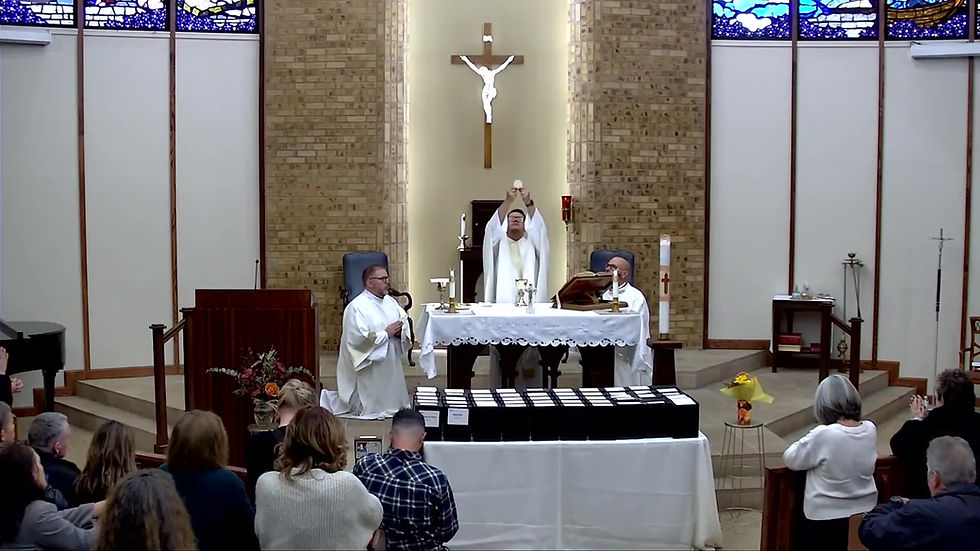
Two women arrived at Mount Olivet Catholic Cemetery in Wheat Ridge on All Souls’ Day carrying cremated remains that others had entrusted to them. They came with an opportunity to do something important for the people now in their care: lay them to rest in a consecrated cemetery.
For Erin Scherer, who helped prepare the liturgy, those encounters reflected the gathering's purpose.
“Both of them had received the cremated remains from others, so they were very grateful to be able to inter them in a consecrated cemetery,” Scherer said.
Their experience was part of a larger gathering on November 2, when Catholic Funeral and Cemetery Services of Colorado (CFCS) welcomed families for its annual Bring Them Home Mass. Held on All Souls’ Day, when the Church prays for all the faithful departed, the Mass and committal offered families a way to entrust their loved ones to God and place their cremated remains on sacred ground.
For Michelle Pursley, who provided music for the Mass, the gathering was larger and more moving than she had expected.
“I was so encouraged to see, however, that the chapel was bursting with dozens of families who came seeking the services of Mount Olivet and CFCS, quietly reverent and charitable to each other,” she said.
Pursley described people of different ages, English- and Spanish-speaking families, and people with varied faith experiences, all joining in prayer. The presence of families with young children particularly touched her.
“Even families with young children were present, praying for their deceased loved ones; that might have been the most beautiful witness of all,” she said.
Their presence expressed something central to Catholic life: our responsibility to love and pray for one another continues after death. At Mass, the Church commends the dead to God’s mercy and draws the grieving into the hope of Christ’s resurrection.
That hope also shapes the Church’s care for the body.
The Church permits cremation, while continuing to recommend burial of the body. When cremation is chosen, the Church calls for cremated remains to be laid to rest in a sacred place, ordinarily a cemetery. Its instruction, Ad resurgendum cum Christo, explains that this practice helps keep the departed within the prayer and remembrance of both their families and the Christian community.
A permanent resting place gives future generations somewhere to visit and pray. It also expresses the dignity of the person who has died. Cremation does not diminish the reverence owed to that person’s remains.
For a family keeping cremated remains at home, however, arranging interment may feel difficult. Questions about cost, uncertainty about what to do, or the pain of another farewell can make it hard to begin. Others, like the two women Scherer assisted, may receive remains after someone else’s death and find themselves responsible for arrangements they had never anticipated.
Bring Them Home offers a way forward.
Through the ministry, cremated remains are placed in the Crypt of All Souls at no cost to families. The invitation continues throughout the year through monthly committal services, so families do not need to wait until another All Souls’ Day to take that step.
Reflecting on the day, Scherer expressed gratitude for the trust families placed in the ministry and for the courage it takes to bring a loved one for interment.
“This Mass is important because it breaks down any economic barrier and provides an opportunity to lay loved ones to rest on consecrated grounds,” she said.
The ministry puts into practice one of the corporal works of mercy: burying the dead.
Pursley saw that mercy in the care staff members extended to those gathered.
“Everyone seemed seen and cared for, and the beauty of the Mass was restorative,” she said.
Interment does not end grief. Families continue to miss the people they love, and each person carries that loss differently. But a cemetery offers a lasting place for remembrance, where a visit, a prayer or the simple act of speaking a loved one’s name can become part of life after loss.
For anyone who has cremated remains at home, or who has been entrusted with the remains of a relative or friend, the first step is a conversation with CFCS. Staff can explain the monthly services and help arrange placement in the Crypt of All Souls, free of charge.
The families who gathered Nov. 2 came carrying the responsibility of caring for their dead. In the prayers of the Mass and the act of committal, the Church helped them carry it.