America’s Papal Moment

“All roads lead to Rome.” This proverbial saying from the ancient empire remained true even as Jesus’ disciples made their way across the world. The Eternal City, the capital of one of the world’s greatest empires, has served as the center of Christ’s Church for two thousand years, unifying and strengthening Christian communities worldwide.
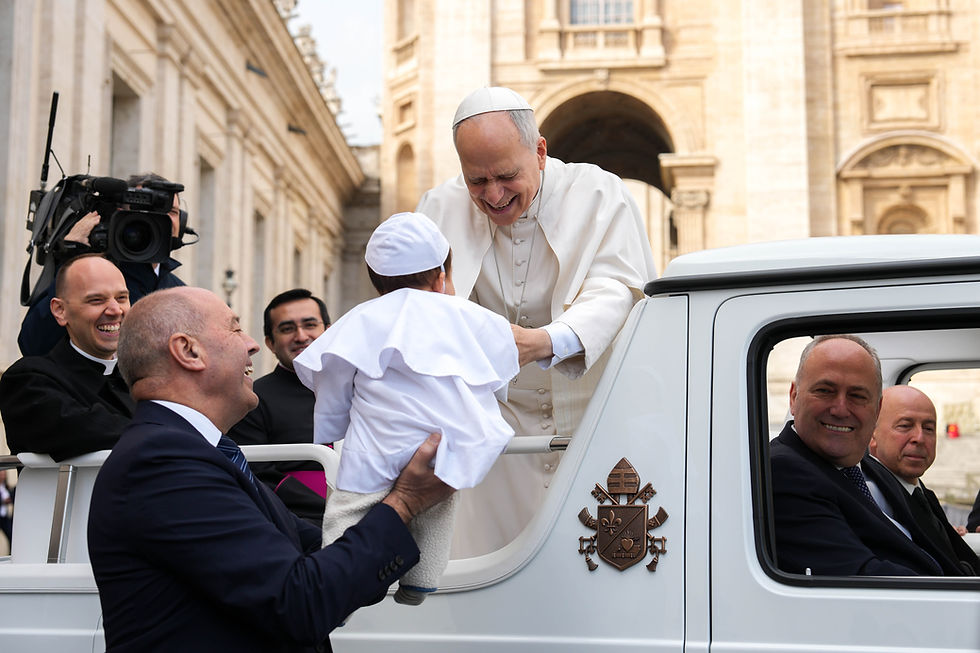
As the United States celebrates the 250th anniversary of its founding, we have the unexpected joy of one of our own ascending the papal throne. It’s a remarkable occasion for such a young church, and it marks a significant turning point for both the Church and our country. Although the Gospel did not reach the Americas for a millennium and a half, it has certainly taken root here. Just under half of the world’s Catholics reside in North and South America combined (47.8% as of 2023). It shouldn’t be too surprising, therefore, that the Americas have begun to produce their first popes.
Many people predicted, with Cardinal Francis George among the most prominent, that America would never produce a pope so long as it was a superpower. It would seem like undue influence in the Church alongside its political and economic clout. Pope Leo XIV, however, is not the typical American. He spent most of his life outside his homeland as a missionary priest and bishop, head of the Augustinian Order in Rome and within the Papal Curia. He typifies America’s identity as a great melting pot — with European, Latin American and African descent — and a ministry that has reached back across continents. In Leo, we see American leadership and service at its best.
Looking back in history, we find that the predominant political power of the age often produces popes. Compelling candidates emerged from the most advanced cultures, which were attuned to the needs of the day. For instance, when Byzantium ruled Rome, there were many Greek popes, and later, during the rise of the Damascus Caliphate, there were many Syrian popes. At the height of the Roman Empire, we began to see German popes called into the city as reformers to break the stranglehold of noble families fighting over the papacy. With the rise of the French kingdom, French popes predominated, although this proved disastrous when they moved the papal court to Avignon. And in the very year Spain discovered the New World, the infamous Spaniard, Alexander VI, the Borgia, was elected pope. After four hundred years of Italian popes, who provided stability following the Reformation and modern political revolutions, the Church looked behind the Iron Curtain and called upon a Pole to lead the Church’s stand against Communist oppression, inaugurating a new era of an international papacy.
John Paul II’s election became a watershed moment for Poland, fulfilling centuries of pent-up hopes and aspirations. Suffering from partition among hostile neighbors and occupation by both Naziism and Communism, Poland came to see itself as a martyr nation, whose suffering would serve a redemptive purpose. The opportunity came by preparing one of her sons for the Petrine ministry, instilling in him the hard-won faith and confidence solidified by centuries of faithful perseverance. His election also marked a turning point for the world, as John Paul led a moral revolution that proved instrumental in the peaceful downfall of the Soviet Union.
If John Paul was called from Poland to face the challenge of Communism, Pope Leo, with his American background, has already stated his intention to address the AI revolution, expanding Catholic Social Teaching to address the pressing need to guide new technological discoveries. Since America has been leading the charge in this innovation, it is only fitting that an American has been called to lead the Church at this crucial moment.
This is America’s opportunity to make its greatest impact upon the world. For Catholics, looking with the eyes of faith, we know that spiritual contributions exceed the happenings that usually take center stage in history books — battles, economic crises and the doings of political figures. The first American popes may become one of our greatest contributions to the Church and the world. What are the gifts our nation brings into this moment? America is known for its emphasis on freedom, which lends itself to standing up for human dignity, but can also lead to excessive autonomy. We have an optimism that informs a “can-do” attitude, which is valued by other nations. We are both entrepreneurial and efficient managers who are leading the way in technological development. America has been known as a melting pot for the world, becoming “one out of many,” though its unity has become seriously strained.
Pope Leo brings this background into his pontificate and also has the opportunity to purify these gifts in Christ. His own motto shows how America can live up to its ideal of unity: In Illo uno unum,” meaning “one in the One.” He has already manifested this priority in bringing needed unity to the Church. Likewise, Christ shows us the path to true freedom and the end to which we should put our efforts and wealth: building others up in charity.
More than a laurel to rest upon, the election of Leo XIV may be an invitation to follow in his footsteps, using the great legacy of our nation and the gifts we have been given to serve all those in need. While we celebrate America’s Semiquincentennial, the Lord may be calling the nation’s Catholics to redouble our efforts to put people before profits, wisdom before innovation and to spread the Kingdom of God throughout the world.