
American Holiness: 5 Catholic Saints and Witnesses Who Reveal 250 Years of Grace in Our Nation's Story

As America marks 250 years, these saints and holy witnesses show how God has raised up Catholics to educate, serve, evangelize and strengthen the Church in the United States.
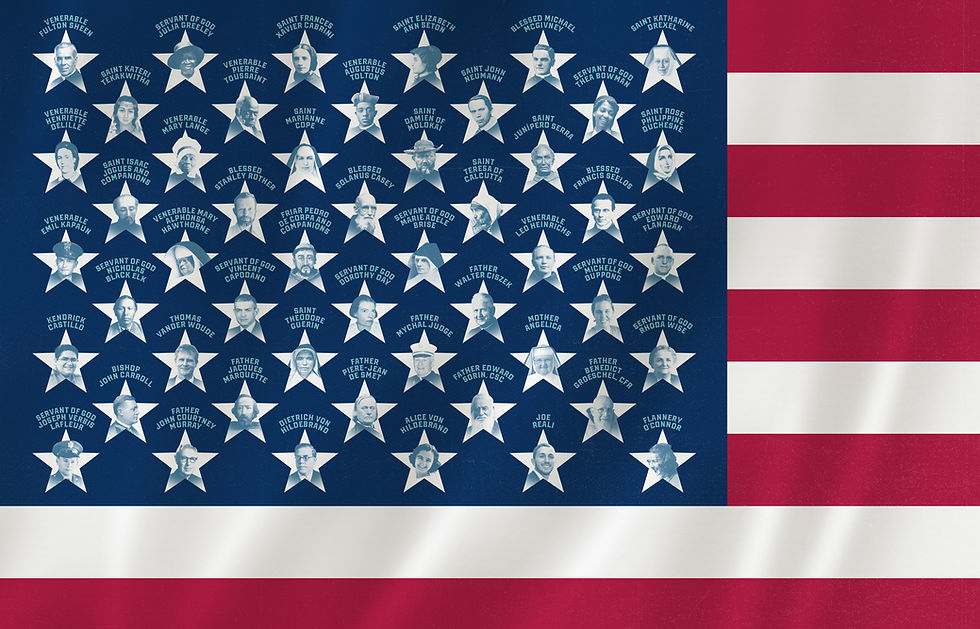
Editor's Note: As we zoom in on our country's 250 years, we see the many saints and witnesses that God has raised up to build up his Kingdom here on earth. These souls shine for their courageous preaching of the Gospel, their prayerful devotion, their love for the poor and their pursuit of God's heart. They show us that God always calls the faithful to live lives of virtue and faith, and with us, wants to transform the world. In this special series, "American Holiness," we'll get to know fifty Catholic saints and witnesses that God called to build up the American Church.
This year, as we celebrate the 250th anniversary of America’s founding, we are offered a chance to look back at some of the storied figures who have helped to shape our great nation’s legacy.
Certainly, there are many distinctly American people who are worth mentioning — George Washington, Abraham Lincoln, Martin Luther King Jr., Susan B. Anthony and countless others — but just as important are those figures within the Church who were invaluable in advancing the good news of the Gospel on American shores and exemplifying a Christian spirit that has become synonymous with American values.
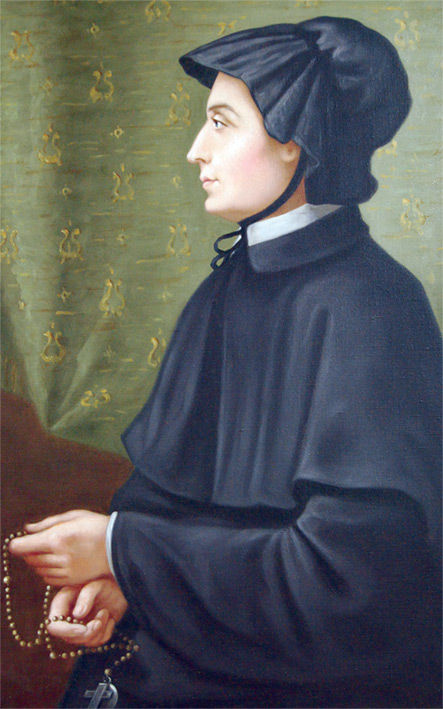
St. Elizabeth Ann Seton
What better place to begin than with the first native-born American citizen to be declared a saint? St. Elizabeth Ann Seton was born in New York City on August 28, 1774, into a well-to-do and prominent Episcopal family.
Sadly, her life was marked by death early on, losing her mother and sister by age four. In 1794, she married William Magee Seton, who suffered from tuberculosis for most of his life. He succumbed to his illness in 1803 while the couple was in Italy. It was there that St. Elizabeth was introduced to the Catholic faith. She returned to New York a widow and was received into the Church two years later, in 1805. She would never remarry, instead devoting her life to serving the Church.
St. Elizabeth once wrote, “Afflictions are the steps to Heaven,” and it is indeed through the afflictions of her life that she earned her rightful place in eternity. Amid being a mother to her five children, two of whom tragically died, St. Elizabeth moved to Maryland and founded the first U.S. women’s religious order, the Sisters of Charity. She also helped establish the first parochial school, St. Joseph, which planted the seeds of Catholic education in America.
In her too-short 46 years, St. Elizabeth embodied everything that’s beautiful about America, and the impact of her bold and faithful witness still resonates today.
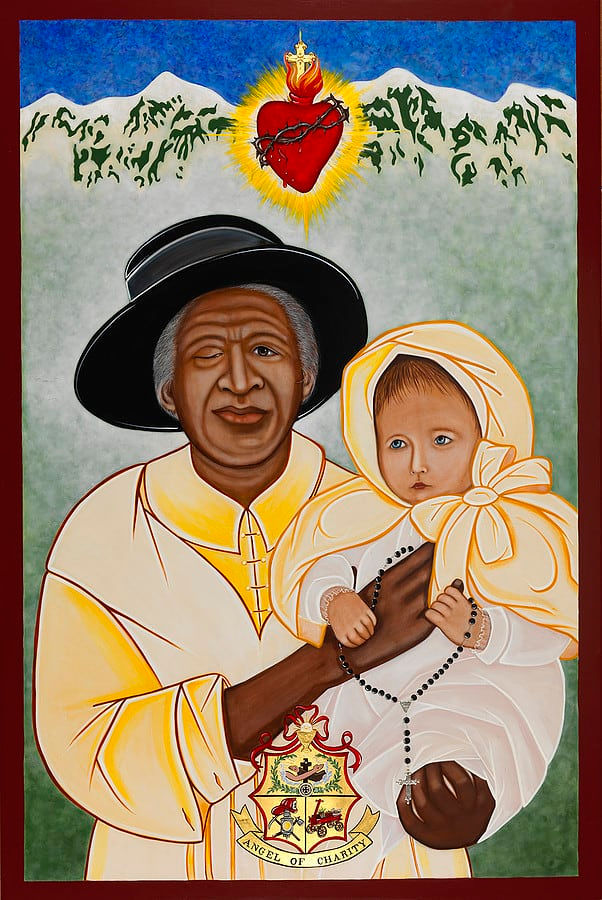
Servant of God Julia Greeley
Known as Denver’s Angel of Charity, Julia Greeley lived a quiet, humble life of service to the poor, even though she was poor herself. Born into slavery in Hannibal, Missouri, sometime between 1833 and 1848, she moved to Denver in 1878 after her emancipation to work for Julia Gilpin, whom Julia credited for “giving me my faith.” She wore a scar of her slavery in the form of a wound on her right eye, which afflicted her all her life.
Baptized on June 26, 1880, Julia began her deep relationship with Jesus, his Sacred Heart and his Church. Despite severe arthritis, she would walk to various Denver fire stations on the first Friday of each month and deliver Sacred Heart pamphlets. She would also quietly deliver food, medicine and other provisions to poor families in the dark of night, giving from what little she had.
Julia was also a daily communicant and fasted regularly, being sustained only by the Body of Our Lord; she once told a priest, “Communion is my breakfast.” Providentially, Julia died on the Feast of the Sacred Heart in 1918. In the years after her death, Denver came to know her humility of heart. Everything she did was done out of love for Christ and her neighbor.
In 2016, Julia’s cause for canonization was opened, making her the first Coloradan to be proposed for sainthood. Now recognized as a Servant of God, she is interred at Denver’s Cathedral Basilica of the Immaculate Conception, an esteemed honor befitting someone so humble of heart. As Bishop Jorge Rodriguez noted during her interment ceremony, “[Julia Greeley] will be the first person buried in Denver’s cathedral. Not a bishop, not a priest — a laywoman, a former slave. Isn’t that something?”
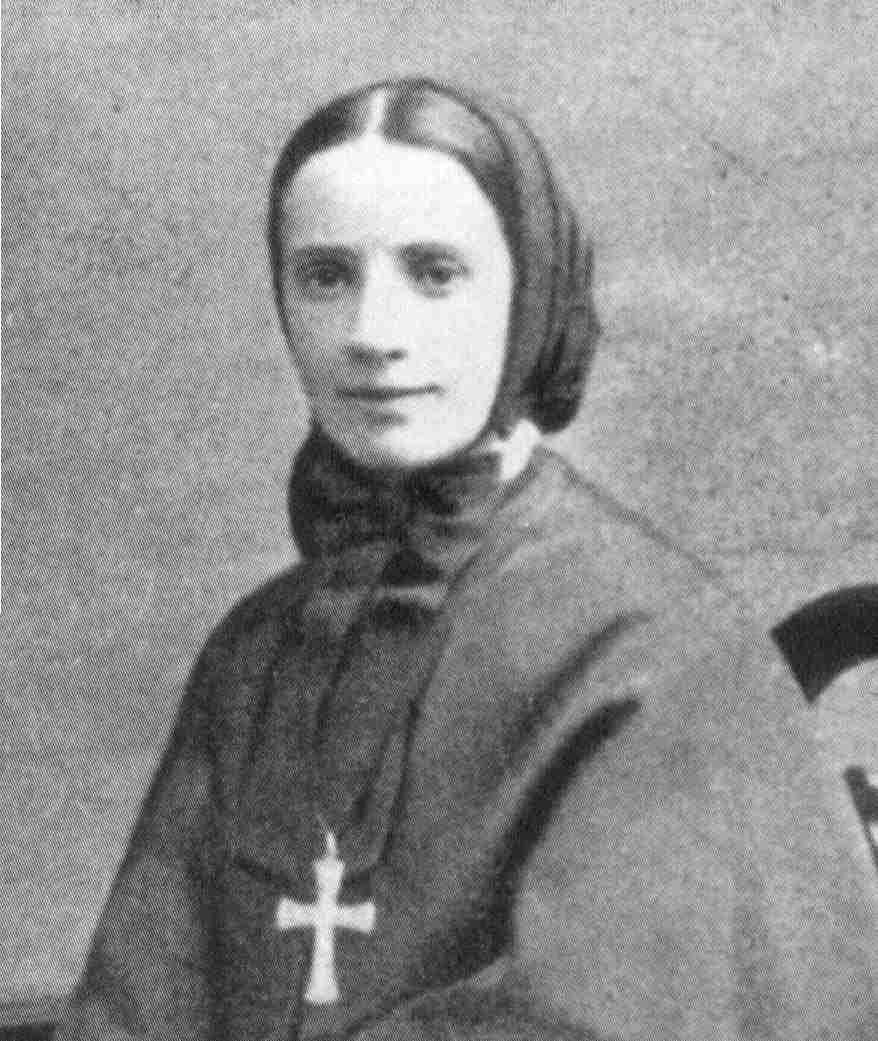
Mother Cabrini
The first naturalized American citizen declared a saint, St. Frances Xavier Cabrini lived up to her more affectionate title of “Mother” in every way. She was born on July 15, 1850, in Sant’Angelo Lodigiano, Italy, and her Italian heritage, along with her deep Catholic faith, shaped her entire ministry.
In 1880, she founded the Missionary Sisters of the Sacred Heart of Jesus with a single mission: to spread the love of Jesus to the marginalized in society, focusing on providing education, healthcare and social services to those they served.
Mother Cabrini felt a call to go east and serve as a missionary with her sisters in China, but was ordered by Pope Leo XIII instead to go “Not to the East, but to the West.” Thus, she embarked for the United States, where Italian immigrants were being severely underserved and shunned by American society.
After a treacherous journey across the Atlantic, Mother Cabrini and her sisters arrived in New York City. Despite serious hardship, and true to her motto from St. Paul’s letter to the Philippians — “I can do all things through Christ who strengthens me” (4:13) — she persevered. She would go on to establish schools, orphanages and hospitals across the U.S., including in Colorado.
America was founded as a country built on hope, and Mother Cabrini exemplified the best of the American spirit — especially the distinctly American call to care for immigrants and treat them with dignity.
Blessed Michael McGivney
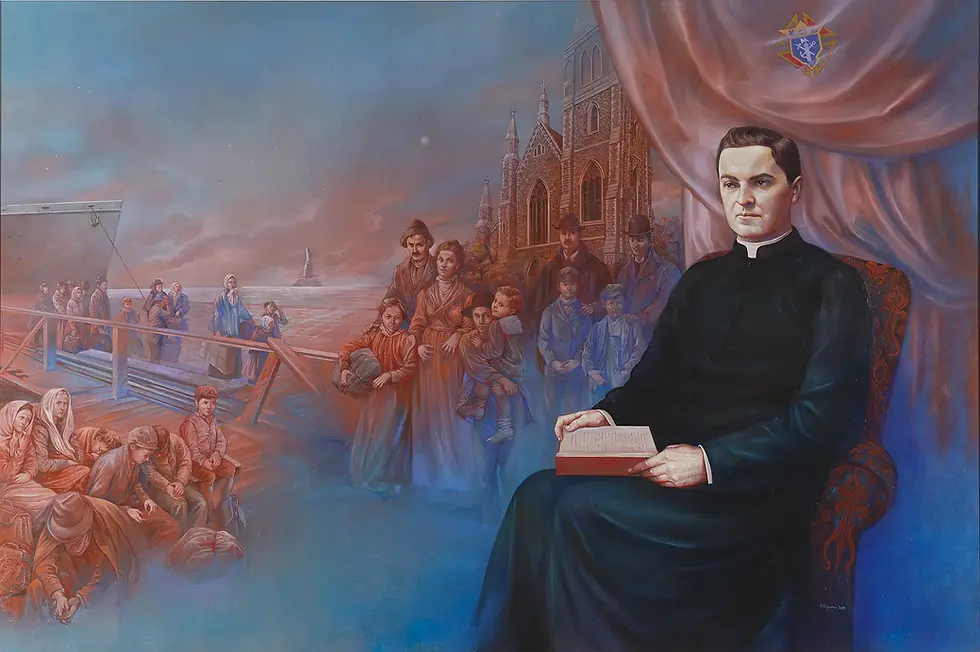
Born in Waterbury, Connecticut, in 1852, young Michael was the first child of Irish immigrants Patrick and Mary McGivney. As Michael grew up, he experienced great prejudice firsthand, as society was unkind to Irish Catholics in those days. Nevertheless, his Catholic faith sustained him and helped him rise above to carry out God’s great plan for his life.
Ordained a priest in 1877, he gained a reputation for being a man of the people. Around this time, men were being lured by anti-Catholic secret societies that offered social and employment benefits. Father McGivney, recognizing the need to provide men with financial and social support while also strengthening their faith, decided to do something about it. He founded the Knights of Columbus in 1882, and the rest, as they say, is history.
Due to harsh labor conditions at the time, Catholic men often died while on the job, leaving their families destitute. The Knights sought to provide support to widows and children who found themselves in this tragic situation.
Under Father McGivney’s tutelage, the Knights helped to spread the Catholic faith all across America. By living out the core principles of unity, charity, fraternity and patriotism, the fraternal organization became a vehicle for the corporal works of mercy — a mission that continues in earnest today and strengthens the very fiber of America.
Archbishop Fulton Sheen
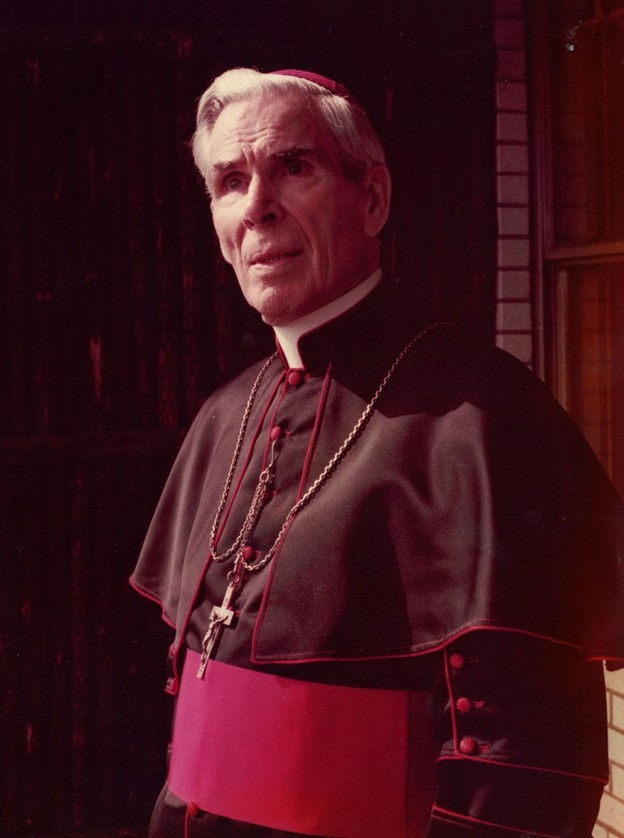
Though unheard of today, there was a time in American history when a Catholic archbishop dominated both the radio and TV airwaves and could be seen in millions of living rooms across the nation every week. Archbishop Fulton Sheen, who will at last be beatified on September 24, was a gifted preacher, a fierce evangelist and one of the most influential American Catholics of the 20th century.
Born in El Paso, Illinois, on May 8, 1895, young Fulton had a humble upbringing on a farm with his parents and three brothers. Even at a young age, Fulton showed promise; indeed, he seemed destined to be a priest. He was ordained in 1919, and through subsequent years of study at the Catholic University of America in Washington, D.C., and the Catholic University of Louvain in Belgium, he quickly became a renowned theologian. He would go on to teach at several Catholic universities and was appointed a bishop in 1951.
As a pastor, Archbishop Sheen was caring but firm, and his preaching resonated with Catholics and non-Catholics alike. He used the media of the time to spread the Church’s message and teachings, first via radio starting in 1930 and then via television starting in 1951. His weekly TV program, Life is Worth Living, drew some 30 million viewers each week and earned Archbishop Sheen an Emmy for Most Outstanding Personality.
There’s no way to know how many conversions Archbishop Sheen was responsible for, but given his reach and impact, it’s very likely that an entire generation of Catholics learned something new about the faith from him and were drawn into a deeper relationship with Christ. Arguably, no Catholic figure besides the pope has had a greater influence on American Catholicism over the last century. As the Church prepares for Archbishop Sheen’s beatification, America can give thanks for his speaking the truth of the Gospel to a world desperately in need of it.
The American Saints of Today
The examples of these saints and witnesses still shine bright today, and their legacy lives on through the faith that they so boldly proclaimed and that animated the good work they carried out as American citizens. They were proud of their country, but even prouder of their faith.
As America looks to the next 250 years, who will be the great American saints of today? Could it be you?