3 Things the New ‘Knives Out’ Movie Taught Me About the Faith

Rian Johnson's Wake Up Dead Man is a moving depiction of the faith in the modern age.
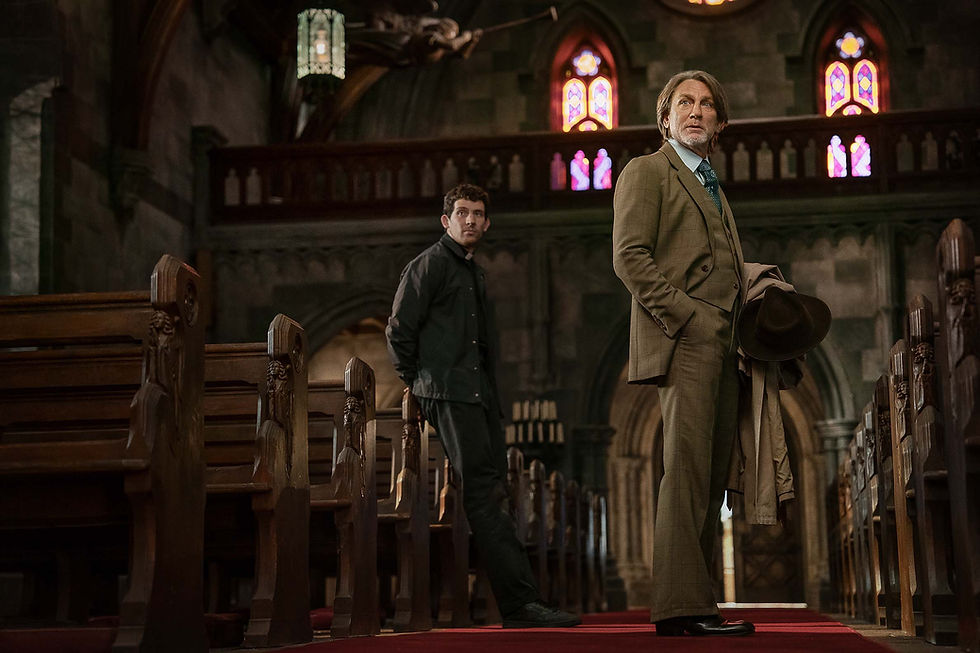
Wake Up Dead Man is the best movie I’ve seen in theaters in a while.
Since seeing the movie before Thanksgiving with Risen Christ Parish in Denver, I’ve been talking it up to friends nonstop. Just this past weekend, some friends shared that they’d seen it and were floored. One, who hadn’t read the Denver Catholic in a bit, even commented, “That priest reminded me of Father Scott!” It really is a great film.
Let me explain.
It’s not a perfect movie, and be warned, there are mature themes throughout. There are a few Catholic inaccuracies, as well as tough scenes and dialogues.
But it is a powerful movie, a moving depiction of the faith in the modern age.
Spoilers ahead!
The newest installment of the “Knives Out” franchise centers on two priests: Monsignor Jefferson Wicks (Josh Brolin) and Father Jud Duplenticy (Josh O’Connor). When Monsignor Wicks is found murdered on Good Friday, with his eager parochial vicar and shrinking flock all on the suspect list, the inimitable Benoit Blanc (Daniel Craig) descends upon the small New York town of Chimney Rock to help solve the mystery.
I’ll spare you my impassioned tangent about the movie’s beauty. Suffice it to say, the cinematography, lighting, dialogue and plot are unlike anything I’ve seen in some time. Again, reader be warned, the first 20 minutes or so present some of the toughest plot points, but if a viewer can power through and delay gratification for a bit, there is much to glean from this new pop culture moment.
Here are three things Wake Up Dead Man showed me (or reminded me) about the faith:
Mercy is a full-time job.
It’s towards the middle of the movie. Benoit Blanc and Father Jud are deep in the weeds, trying to figure out who killed Monsignor Wicks in the locked-room mystery of the century.
They discover a work order to open the Wicks family mausoleum, made before Monsignor’s death, and jump on the lead. Father Jud calls the construction company to ask who placed the order. On the other end, there’s Louise, a lovely, friendly woman who chats Father’s ear off.
The tension is palpable. Blanc is rushing Father Jud, demanding to know who placed the order. Father Jud is trying, ever so politely, to press the woman on the other end of the line for an answer. The stakes are high, after all.
Try as he might, Father Jud just can’t get the woman to stop chatting. He grows visibly frustrated, stressed and pressured. There’s a killer on the loose! Whodunit?
Then there’s a pause. “Father, can you pray for me?”
In an instant, the tension is shattered. Father Jud’s face relaxes. Compassion infuses his voice. God is near. He closes the door to continue the conversation in private, much to Blanc’s chagrin.
Blanc stands waiting, increasingly frustrated by the delay, in the scenes that follow. When he finally dares to open the door to see what’s taking so long, he finds Father Jud praying with the woman on speaker phone. Before he hangs up, Father Jud promises continued prayers and presence.
That very scene left me near-sobbing in the theaters. You could feel the pressure Father was under: the demands of the day, the responsibilities, the time constraints. Yet, despite it all, Father Jud spoke Jesus’ merciful love into that woman’s suffering. He dropped everything to do so.
I pray our priests never know the specific circumstances that Father Jud knew in that moment (murder, public safety concerns).
How often do they know those emotions, that weight?
How often do they drop everything to attend to the movements of the Spirit in their parishes, ministries and communities?
How often should you and I be doing the same?
Every sinner has a past. Every saint has a future.
Forgive the cliché, but it’s the quippiest way I could think of to summarize this lesson.
Though he serves as the movie’s “hero” and the archetype of a good priest in the film, Father Jud has quite a past. He was a boxer who once killed a man. He punched a deacon, prompting his reassignment to Monsignor Wicks’ parish. He’s quick to anger; he can be impatient, temperamental and judgmental.
Yet, he hears God’s call and responds. He follows Jesus, and his life is transformed. Even his character flaws and sins in the present are held in the light of God’s mercy. He acknowledges his shortcomings and strives to improve.
And the fight for virtue culminates in the powerful Confession scene towards the end, when Father Jud holds the dying murderer in his arms as she confesses her crimes. In that dire moment, he even encourages her to forgive a grudge she’d held for decades.
“You’re pretty good at this,” the killer quips as she lay dying.
In that moment, Father Jud has to put aside all his own preconceptions, judgments and feelings. Suffering is before him, incarnate. In that moment, Father Jud speaks God’s healing mercy over this woman’s life, reconciling her to the Father.
Despite his past, despite her past, despite your past and mine, God can still move. He can still work. His mercy is above all.
Redemption is always possible.
That Confession scene shows forth another poignant lesson: it’s never too late to ask for God’s mercy.
Through that Confession, both the killer and Father Jud catch a glimpse of God’s merciful heart, even in such dire straits. For the killer, mercy is near and forgiveness is active. For Father Jud, the past is caught up in God’s mysterious providence; he who once wrought violence now brings healing.
It reminds me of the now-famous Pope Francis quote from early in his pontificate, “The God of mercy; he does not tire of forgiving. We are the ones who tire in asking for forgiveness, but he does not tire.”
Redemption is always possible. God’s mercies are new each morning (see Lamentations 3), and we can begin again each day, as Ven. Bruno Lanteri would oft encourage.
One quick clarification: we shouldn’t put off repentance for an unseen day, for that day may not come, as the several victims in Wake Up Dead Man would attest.
But, when we do turn to the Lord in contrition, seeking pardon for our offenses and grace to begin anew, he runs to meet us — full sprint, hair flying in the breeze.
His mercy, his redemption, are never far off.